

Table of Contents
ToggleYour Nintendo Switch is a workhorse, it goes to work, to friend’s houses, on road trips, and probably gets stuffed into a backpack without a second thought. But that portability is also its weakness. Without proper protection, your console’s screen gets scratched, the Joy-Cons rattle loose, and suddenly you’re dropping money on repairs that could’ve been prevented with a decent Nintendo Switch game case. Whether you’re a commuter who plays during lunch breaks, a parent managing multiple devices, or someone who takes their handheld seriously, finding the right case isn’t just about aesthetics, it’s about protecting your investment and keeping your gaming setup organized. This guide breaks down everything you need to know about Nintendo Switch cases: the types available, the features that actually matter, and which options deliver real value across different budgets and playstyles.
Key Takeaways
- A quality Nintendo Switch game case protects your $300+ console investment from scratches, damaged Joy-Cons, and lost cartridges, while keeping games and accessories organized in one designated spot.
- Hard shell cases offer maximum protection for frequent travelers and rough handling, while soft sleeve cases prioritize lightweight portability for controlled environments, with budget options ranging from $10–$30 to premium choices over $70.
- Match your Nintendo Switch case choice to your actual lifestyle: assess where your console travels, how it’s transported, and what problems you’ve already encountered before selecting between protection-focused hard cases or portable soft sleeves.
- Material quality—specifically EVA foam for hard cases and durable neoprene for soft cases—directly determines lifespan, so look for solid stitching, reliable zippers, and manufacturer warranties as indicators of durability.
- Mid-range hard cases ($30–$70) deliver the best value for most gamers, offering solid protection and storage capacity without unnecessary premium markup, while basic maintenance like monthly zipper care and moisture management extends case longevity significantly.
- Verify compatibility with your specific Nintendo Switch model (standard, Lite, or OLED), as each has different dimensions, and consider game card storage cases separately if you carry a large physical library.
Why Investing in a Quality Nintendo Switch Game Case Matters
A Nintendo Switch costs between $300–$350 depending on the model. Your games and digital library? Potentially hundreds more. Yet people skimp on protection and end up with a scratched screen or damaged Joy-Cons within months. The right Nintendo Switch game case prevents that damage entirely.
Screen scratches aren’t just cosmetic. They catch light in annoying ways during gameplay, reduce visual clarity, and tank your console’s resale value. Joy-Cons drifting (a known issue) gets worse if they’re jostled around during transport. Game cards get lost or bent when tossed into random bags. A quality case addresses all of these problems simultaneously.
There’s also the organizational benefit. Most people own more than one game, but shoving cartridges loose into a backpack is a recipe for losing them in a car seat or dropping them down stairs. A proper case keeps everything, console, Joy-Cons, charger, games, in one designated spot. You grab it and go. No frantic patting of pockets wondering where your cartridges went.
Beyond protection, there’s comfort and portability. A poorly designed case makes your Switch awkward to carry, puts strain on your shoulders or hands, and turns traveling with your console into a pain. A well-designed case feels natural, distributes weight evenly, and doesn’t add unnecessary bulk. You actually want to bring it places instead of leaving it at home.
Types of Nintendo Switch Game Cases
Not all Nintendo Switch cases are created equal. The market breaks into distinct categories, each optimized for different needs. Understanding the differences helps you pick the right type before diving into specific products.
Hard Shell Carrying Cases
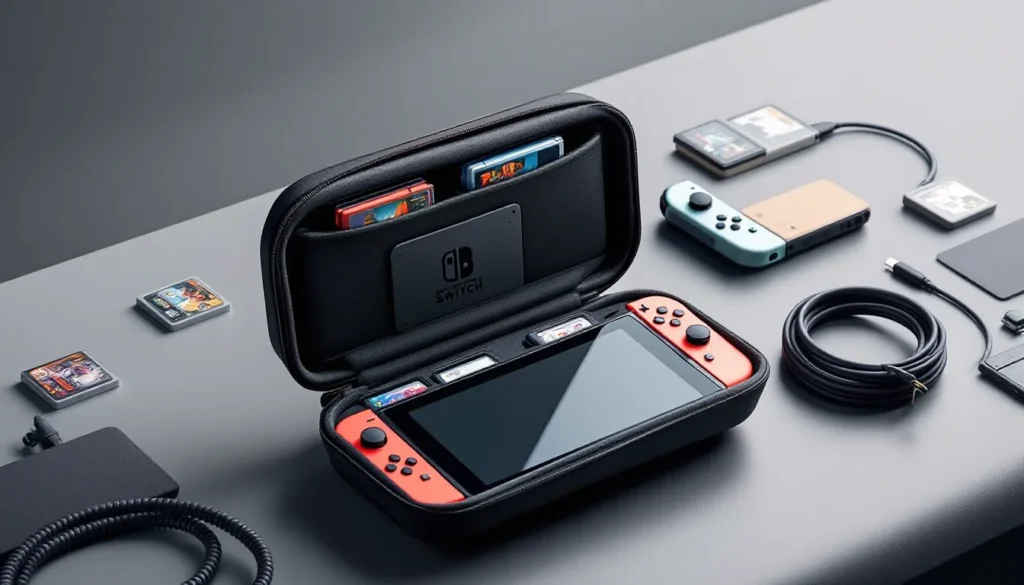
Hard shell cases are the tanks of Switch protection. They’re typically constructed from EVA foam (ethylene-vinyl acetate) or rigid plastic, with thick walls that absorb drops and compression damage. The downside is weight and bulk, these cases add noticeable heft to a bag.
Hard shells excel if you’re constantly moving your console between different locations, traveling by plane, or have a history of accidentally crushing things. The rigid structure protects against damage that would destroy a soft case. Many feature custom-molded interiors that hold everything in place, preventing the clinking and jostling that damages Joy-Cons and screens over time.
They also typically offer the most storage. A quality hard case includes dedicated compartments for game cartridges (sometimes 10+ slots), the charger, cables, and accessories. If organization matters to you, hard shell cases deliver.
Soft Sleeve Cases
Soft sleeve cases prioritize portability and simplicity. They’re typically made from neoprene or similar fabric, designed to wrap snugly around your console. They slip into backpacks easily and add minimal weight.
The trade-off is protection. Soft sleeves protect against scratches and dust, but they won’t absorb impact from drops or protect your Switch if something heavy lands on your bag. They’re best for people who keep their Switch in a controlled environment, a desk drawer, a dedicated backpack pocket, or a car bag that doesn’t see heavy use.
Soft sleeves are ideal if you already have a quality backpack and don’t need extensive game card storage. They’re also the cheapest option by far, often running $10–$20.
Dock-Compatible Cases
Dock-compatible cases solve a specific problem: how do you protect and carry your Switch without removing it from the dock? These cases have an open bottom or side cutout that lets your Switch stay docked while secured in the case.
They’re niche products aimed at people who want protection while keeping their Switch in a fixed location, like on a shelf, desk, or in a traveling setup where you use the dock frequently. They offer modest drop protection but don’t collapse around your console for portability. If portability isn’t your priority and you want dock protection, this category exists, but most gamers find traditional carrying cases more practical.
Game Card Storage Cases
These aren’t full console cases, they’re dedicated storage for game cartridges. They range from simple card sleeves to organized boxes with 20+ slots. If you have a large physical game library and need to keep cartridges organized without carrying your entire console, these are invaluable.
Many gamers buy a game card storage case separately and pair it with a smaller console carrying case. This gives flexibility: lightweight portability when you want it, plus dedicated storage at home for your games.
Key Features to Look For
Knowing case types is one thing. Knowing what actually separates a durable case from one that falls apart in six months is another. Here are the features that genuinely impact real-world performance.
Durability and Material Quality
Material quality directly correlates with lifespan. EVA foam is industry-standard for protective cases because it absorbs shock, resists tears, and maintains its shape for years. Neoprene and nylon work well for soft cases if the stitching is solid. Cheap plastic cracks, zippers fail, and foam delaminates.
Check the seams and stitching quality. Loose stitching is where soft cases fail first. The zipper should glide smoothly and feel substantial, flimsy zippers jam and break under normal use. If you can inspect the case in person, flex it gently and check for cracking or separation in the material.
Look for warranties or durability guarantees. Reputable case manufacturers stand behind their products because they know they’ll last. If a case comes with zero warranty and suspiciously cheap pricing, there’s a reason.
Storage Capacity and Organization
How many games do you actually carry? If you pack 12 cartridges every trip, a case with six slots won’t cut it. If you carry two games and the console, over-engineered storage is wasted money and added bulk.
Dedicated compartments matter. A case where everything gets tossed into one big pocket is less organized than one with molded slots for the console, a separate pouch for cables, and dedicated game card holders. Cable management becomes critical too, integrated cable organizers prevent the mess where your charger gets tangled with your headphones.
Some cases include removable dividers that let you customize storage. That flexibility is actually useful if you swap between carrying a full library and traveling light.
Portability and Weight
Portability isn’t just about size. It’s about how the case feels when you’re carrying it. A shoulder strap distributes weight better than handles alone. Padding on straps prevents shoulder pain during longer carries. Compact dimensions fit into airplane overhead bins and small backpack pockets.
Add up the case weight itself, the console weight, and any accessories you typically carry. Hard cases routinely add 1–1.5 lbs. For someone commuting on public transit daily, that’s noticeable. For occasional travel, it’s irrelevant.
If you’re constantly moving your Switch around, daily commute, multiple locations, prioritize lighter cases. If it lives mostly in a car or stays at home, protection matters more than portability weight.
Comfort and Ergonomic Design
This gets overlooked but makes a huge difference. A case with thin, cheap straps cuts into your shoulders. One with excellent padding feels natural even after carrying it for an hour. If a case has a carrying handle, it should be comfortable to grip without your hand getting compressed.
Thermal management matters too. Some cases trap heat from your Switch, which accelerates battery degradation and causes throttling during intensive games. Better cases use materials that allow airflow, especially around the Switch’s bottom (where the ventilation port sits). Hard cases with proper padding usually handle this better than sealed soft sleeves.
How to Choose the Right Case for Your Needs
Choosing a case isn’t about finding the objectively “best” option, it’s about matching a case to your specific lifestyle. Here’s how to narrow down the decision.
Assessing Your Gaming Lifestyle
Start with honest reflection: where does your Switch spend most of its time? If it’s primarily at home on your TV dock, a hard carrying case is overkill. A soft sleeve or dock-compatible case is sufficient. If you’re traveling constantly, flights, trains, different cities, invest in a hard case.
How rough is your typical environment? Rough-and-tumble backpack that gets thrown around? Hard case. Sitting in a dedicated backpack pocket? Soft case handles it fine. Sharing bags with heavy items? Hard case protects better.
Are you carrying one game or many? Casual player with two cartridges? Basic storage is enough. Collector with 30+ games? Dedicated game card storage or a hard case with extensive slots becomes practical.
The honest assessment is: does your current setup cause problems? If your Switch gets scratched, your games get lost, or carrying it is annoying, that’s the problem a case should solve. If your Switch travels in a dedicated bag and never gets damaged, a premium case might be unnecessary.
Budget Considerations
Case pricing ranges from $10 to $150. That’s a massive gap, and spending more doesn’t always mean better value. Here’s how budget typically breaks down:
Budget tier ($10–$30): Basic soft sleeves and simple hard cases. Protection is adequate for normal use. Storage is limited. Build quality is usually fine, but durability can be questionable. Good if you’re testing whether you actually need a case.
Mid-range ($30–$70): Quality hard cases with good protection, decent storage, and better build quality. Most people’s sweet spot. Protection is solid, storage meets realistic needs, and they’ll last years. Best value for money is typically here.
Premium ($70+): Specialized designs, premium materials, excellent storage, and top-tier build quality. Often includes unique features like integrated cooling or modular storage. Worth it if specific features justify the cost, but not necessary for basic protection.
Don’t confuse price with value. A $50 case might protect your Switch better than a $100 case if that $100 case prioritizes style over substance. Read reviews from people describing actual durability, not just unboxing impressions.
Compatibility with Nintendo Switch Models
Nintendo Switch, Switch Lite, and Switch OLED have different dimensions. Most cases specify which models they fit. A case designed for standard Switch might be too loose for Lite or too tight for OLED.
Switch OLED is physically thicker than standard Switch due to the larger screen and improved stand. If you own an OLED, verify the case accommodates it. Some universal cases claim to fit all models but fit none of them perfectly.
If you own multiple Switch models (like a parent managing a household with kids’ Lites and your own OLED), you’ll need cases for each, or look for a truly universal option. That’s a practical consideration that affects your purchase.
Top-Rated Cases and What Makes Them Stand Out
Rather than listing every case available, here’s what the top performers actually deliver. These represent different tiers and use cases, so pick the category that matches your needs.
Premium Options for Maximum Protection
Premium hard cases from established brands like Satisfactory, SCARS (Security Cases for Advanced Rapid Storage), and Lamicall offer the most comprehensive protection. These typically feature multi-layer EVA foam, custom molding for every component, and storage for 20+ game cartridges.
What justifies premium pricing? Superior impact absorption from layered foam, better zipper quality that handles thousands of open-close cycles, and careful weight distribution. Some premium cases include integrated cable management that keeps your charger, cables, and accessories organized in dedicated compartments. Others use weather-resistant materials if you’re traveling in uncertain conditions.
The Switch OLED made premium case design more important because it’s a $350+ device. A case that’s engineered to protect that investment, with reinforced corners, padded edges, and shock absorption, is reasonable.
These cases also typically come with longer warranties (2–3 years) and customer service that actually responds if something breaks. If you travel frequently, drop things, or own a premium Switch model, the investment makes sense.
Mid-Range Choices With Great Value
Mid-range hard cases like Hestia Goods, AmazonBasics gaming cases, and MOMAX offerings deliver serious protection at reasonable prices. Storage typically fits 8–12 game cartridges, EVA foam construction is solid, and zippers are reliable.
These cases handle daily commutes, occasional travel, and normal accidents without breaking a sweat. They’re not engineered for extreme conditions, but they’re engineered well for realistic daily use. Most people’s actual needs are met by mid-range cases.
Soft cases in this tier from Tomee or Peak Design offer excellent portability with decent protection. They work if your Switch doesn’t encounter heavy impact and you prioritize lightweight carrying.
Mid-range represents the best value because you’re paying for actual quality without premium branding markup. A $50 case that lasts 5 years is better value than a $100 case that lasts 6 years.
Budget-Friendly Options That Don’t Compromise
Not every budget case is garbage. Some generic hard cases and soft sleeves from reputable sellers (Amazon Basics, basics from Nintendo-licensed manufacturers) offer legitimate protection at $15–$30. The gaps are usually in storage capacity (fewer cartridge slots) and accessory options (no fancy cable management).
They work fine if your needs are simple: you carry your console, maybe two games, and occasionally need a charger. Durability is usually adequate for 2–3 years of normal use. Build quality varies, so read specific reviews instead of assuming all budget options are equal.
The reality: spending more protects against worst-case scenarios. A $120 hard case protects better if you drop it from a car, compared to a $20 soft case. But if your worst-case scenario is normal backpack jostling, a budget-friendly option prevents that damage just fine. Match the protection level to your actual risk level.
Maintenance and Care Tips for Your Switch Case
Buying a quality case is half the battle. Maintaining it properly means it actually lasts years instead of deteriorating after one season.
Cleaning: Soft cases accumulate dust and lint. Wipe them down monthly with a dry microfiber cloth. For stubborn dirt, use a slightly damp cloth (not soaked), then air dry completely before storing anything inside. Hard cases collect dust in the seams and corners, use a soft-bristled brush or compressed air to blow out debris.
Zipper maintenance: Zippers are the first thing to fail. Keep them clean by brushing out lint and dust. If a zipper starts sticking, rub a graphite pencil along the teeth (not too hard, just enough to leave a light coating). That lubrication makes zippers glide smoothly again. Never force a stuck zipper. If it’s truly jammed, stop and assess before forcing it, which tears the teeth and ruins it permanently.
Moisture management: Never store your case when it’s damp. If your Switch gets wet (humidity from travel, accidental liquid exposure), remove it and dry everything before storing. Trapped moisture causes mold growth inside soft cases and rust on zippers in hard cases. After humid travel, leave your case open in a dry area for a few hours.
Storage: When not traveling, leave hard cases unzipped or loosely closed. Zippers under constant tension wear faster. Store in a cool, dry place away from direct sunlight, which degrades materials over time (especially soft cases).
Game card slots: Check compartments regularly for bent or broken cartridges. If a slot gets damaged, stop using it and use another until you replace the case. Forcing a bent cartridge into a damaged slot ruins the game card.
Strap maintenance: Shoulder straps wear faster than the case itself. Check stitching monthly. If threads are coming loose, stitch them back up (or take it to a tailor) before they completely separate. Worn straps eventually fail and make the case difficult to carry.
Basic maintenance takes minutes monthly but extends your case’s life significantly. Gamers who treat their cases like actual equipment (not something to throw in a corner) get years of protection instead of frustrated replacement shopping.
Conclusion
A Nintendo Switch game case isn’t a luxury, it’s practical insurance for a device that’s meant to be portable. The right case protects your hardware investment, keeps your games organized, and makes traveling with your Switch genuinely enjoyable instead of a hassle.
The choice between hard and soft, budget and premium, minimal and feature-packed depends entirely on your habits. Someone commuting daily on public transit has different needs than someone who leaves their Switch in a car. An OLED owner protecting a $350 device makes different purchasing decisions than someone with a used Lite. There’s no universal “best” case, there’s only the best case for your life.
Start by assessing your actual risk level: where does your Switch go, how it gets transported, and what problems you’ve encountered. Then pick a case that solves those specific problems without over-engineering solutions you don’t need. Read reviews focused on durability and long-term performance, not just first impressions. Quality cases from established brands tend to cost more upfront but cost less over time through reliability and longevity.
Your Switch has years of gaming ahead of it. A decent case ensures those years happen without scratched screens, lost cartridges, or damaged Joy-Cons. That’s worth the small investment.