

Table of Contents
ToggleRacing games on Nintendo Switch hit different when you’ve got the right hardware in your hands. While the standard Joy-Con controllers work fine, there’s something about gripping a proper steering wheel that transforms your entire gaming experience, better immersion, more precise control, and honestly, just way more fun. Whether you’re tearing through Mario Kart 8 Deluxe tracks, conquering F1 24, or perfecting your lap times in Gran Turismo Sport, a dedicated Nintendo Switch steering wheel can be the difference between a casual playthrough and genuine competitive performance. But with so many options on the market, finding the right one takes actual research. This guide breaks down everything you need to know to pick the steering wheel that fits your games, budget, and play style.
Key Takeaways
- A Nintendo Switch steering wheel improves lap times, reduces hand fatigue, and transforms racing games from casual playthroughs into genuinely competitive experiences through better control and haptic feedback.
- Choose between wired wheels for zero-latency competitive play and wireless wheels for comfort and convenience, with quality models maintaining minimal input lag regardless of connection type.
- Official Nintendo Switch Racing Wheel Pro offers the safest compatibility guarantee across all racing titles, while third-party options like the Nyxi Hyperion provide excellent value for casual and multiplayer gaming.
- Prioritize grip comfort with textured rubber or padded surfaces, smooth 270-degree rotation without dead zones, and durability features like ball-bearing construction to ensure long-term performance and prevent hand fatigue.
- Games like F1 24 and Gran Turismo Sport nearly require a steering wheel for competitive play, while Mario Kart 8 Deluxe becomes significantly more enjoyable and controllable with proper wheel hardware.
- Maintain your steering wheel through regular grip cleaning, compressed air for buttons, proper cable storage, and firmware updates to keep it performing optimally for years and outperforming newer budget alternatives.
Why Upgrade to a Steering Wheel Controller for Nintendo Switch
The standard Joy-Con setup works, but it’s not optimized for racing. Your thumbs are already doing too much, managing acceleration, braking, steering, and item usage all at once creates hand fatigue and limits precision. A steering wheel redistributes those inputs across a larger surface, letting you manage multiple actions without cramping.
Haptic feedback becomes genuinely useful with a steering wheel. When you feel road texture, collision impact, or engine vibration through a wheel, your brain processes it instantly. That sensory feedback dramatically improves reaction time and vehicle control. The physics of it matters: holding a wheel naturally positions your hands for thumbstick control of acceleration and braking, while the wheel itself handles steering input the way your brain expects.
Competitive players notice the difference immediately. Lap times drop, oversteer and understeer become predictable, and corner entry becomes muscle memory rather than guess-and-check. Even casually, a wheel makes Mario Kart feel less twitchy and more controllable. You’re not fighting the controller, you’re commanding the vehicle.
Types of Nintendo Switch Steering Wheel Controllers
Not all steering wheels are created equal. Understanding the main categories helps you narrow down what actually works for your setup and preferred games.
Wired vs. Wireless Options
Wired wheels connect directly to your Switch or connect via a USB adapter. They’re cheap, reliable, and zero latency, important for competitive play. The trade-off: you’re tethered to your console, which limits where you can sit. Wired options work great for docked mode, but tabletop play becomes awkward.
Wireless wheels give you freedom of movement and feel more natural for couch play. Latency is still minimal on quality models, though cheaper wireless wheels sometimes suffer from input lag. Battery management is your responsibility, most last 15-20 hours per charge, which is fine until you forget and mid-race your controller dies. Wireless is smoother for casual play and streaming, wired is better if you’re chasing every millisecond of responsiveness.
Grip Design and Build Quality
Cheaper wheels use thin plastic that becomes uncomfortable after 30 minutes. Your hands sweat, the wheel slips, and you’re fighting the controller instead of the track. Quality wheels feature textured or rubberized grips that maintain your hold even during intense sessions.
Wheel diameter matters more than people think. Smaller wheels (6-8 inches) fit better in cramped spaces and suit younger players. Larger wheels (10+ inches) give you more leverage and feel more like actual vehicle controls. The best wheels also include properly positioned pedals, responsive gas and brake inputs that align with your natural foot positions.
Durability separates good from great. Check the materials: reinforced plastic or aluminum frames last, cheap plastic breaks. Rotational stability is crucial too, the wheel shouldn’t wobble during hard inputs. Ball-bearing construction (not plastic friction) means smoother 360-degree rotation without dead zones.
Top-Rated Nintendo Switch Steering Wheels to Consider
A few steering wheels have earned genuine respect from the community based on build quality and performance.
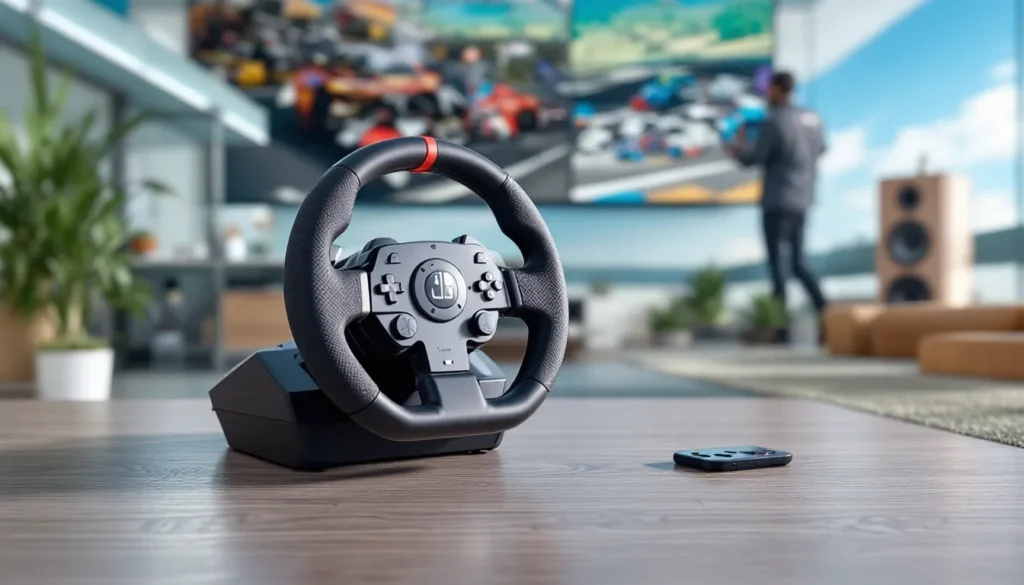
Nintendo Switch Racing Wheel Pro (Official) remains the standard. It’s officially licensed, compatible with every Switch racing title, features solid haptic feedback, and the build quality is predictable. The price reflects that reliability, you’re paying for Nintendo’s guarantee. Wired connection, rubberized grip, and responsive controls make it beginner-friendly and tournament-approved. It’s not flashy, but it works.
Hori Mini Pad Mario Kart 8 Deluxe Edition is built specifically for Mario Kart. Smaller form factor, lighter weight, and optimized buttons for item usage. If Mario Kart is your primary game, this wheel’s layout makes sense. It’s also significantly cheaper than the Pro model. The tradeoff: less suitable for sim racing titles that demand full-range steering input.
PowerA Spectra Infinity Enhanced Wired Controller offers third-party value. Customizable RGB lighting (which does nothing for gameplay but looks clean), solid build quality, and broad game compatibility. It’s cheaper than official options while maintaining responsive inputs. Reviews consistently praise the grip comfort for extended sessions.
Nyxi Hyperion Wireless Racing Wheel represents the wireless option well. 15+ hour battery, minimal latency, and decent build quality for the price. It’s not tournament-grade, but for casual and competitive multiplayer, it performs. The wireless freedom appeals to players who value comfort over absolute precision.
Your choice depends on game preference, budget, and whether you prioritize convenience or competitive edge. Official wheels guarantee broad compatibility but cost more. Third-party options often match performance at lower prices, though durability varies by manufacturer.
Key Features to Look For When Choosing a Steering Wheel
Before buying, evaluate these critical specs so you don’t end up with a wheel that doesn’t match your needs.
Compatibility and Game Support
Not every wheel works with every game. The Racing Wheel Pro is your safest bet, it’s officially licensed and compatible with Mario Kart 8 Deluxe, F1 24, Gran Turismo Sport, Need for Speed Unbound, and most other racing titles. Always check the game’s documentation before buying a third-party wheel.
Some games require specific input mapping that only certain wheels support. Older third-party wheels sometimes struggle with newer titles that demand adaptive trigger feedback or advanced rumble patterns. When researching a specific wheel, look for user reviews from people playing your target games. A wheel might work with Mario Kart but feel wrong in F1 24’s cockpit view.
Haptic Feedback and Rumble Technology
Haptic feedback is what separates engaging from boring. Quality implementation lets you feel road texture, engine strain, and collision impact. This isn’t just immersion, it’s gameplay data. Your hands sense understeer, oversteer, and traction loss before it fully translates to loss of control.
Rumble motors vary widely. Cheap wheels use basic vibration that’s all-or-nothing. Premium wheels feature multiple rumble zones with varying intensity. When F1 24 relays tire grip feedback through rumble, a quality wheel communicates what’s happening: a cheap wheel just buzzes randomly.
Test this in-store if possible. Switch on a racing game and feel how the wheel responds to track surface changes. Does feedback feel accurate and informative, or does it just buzz annoyingly? That’s the difference between a wheel that enhances gameplay and one that’s just distracting.
Comfort and Durability
You’ll be gripping this for hours. Hard plastic will destroy your hands. Look for textured rubber or padded grip zones. Your palms should never make direct contact with unpadded plastic, that’s how you develop hand fatigue and blisters.
Rotational smoothness matters more than novelty features. A wheel with 270-degree range of motion is plenty for Switch racing. Full 900-degree rotation looks impressive but isn’t necessary. What matters is whether rotation feels smooth throughout the entire range without dead zones at center or edges.
Check the durability reputation through user reviews after 6+ months of ownership. Early reviews gush about new gear: long-term reviews reveal actual problems. Look for mentions of loose buttons, worn grip surfaces, or degraded haptic feedback. Quality wheels maintain responsiveness after hundreds of hours.
Best Nintendo Switch Games for Steering Wheel Play
Not every Switch game benefits from a steering wheel. These titles transform with proper hardware.
Mario Kart 8 Deluxe is the obvious choice and frankly the most popular reason people buy Switch wheels. The standard controllers work, but a wheel makes 200cc mode manageable and battle mode genuinely competitive. Steering becomes muscle memory, and you can focus on item timing and track position. Motion controls completely disable when using a wheel (which is good, they’re disorienting in a wheel setup).
F1 24 demands a wheel for any serious play. Without one, the steering is twitchy, and competitive multiplayer becomes frustrating. A quality wheel gives you the precision needed for proper braking zones, apex hits, and wheel-to-wheel racing. Career mode becomes actually challenging rather than aggravating.
Gran Turismo Sport similarly benefits from wheel control. The physics engine rewards precision steering input, and a wheel gives you that granularity. Customized vehicles and tuning setups only shine when you can actually control the car properly.
Need for Speed Unbound and other arcade-style racers work fine with standard controllers but feel better with a wheel. The wider controller surface distributes input pressure better, and you can make smoother steering inputs during high-speed pursuits.
For these titles, a wheel shifts your experience from “functional” to “actually engaging.” In some cases, like F1 24 competitive online, it’s nearly required to be competitive. Even casually, proper steering control prevents unnecessary crashes and enhances overall gameplay.
How to Set Up and Connect Your Steering Wheel
Setup depends on your wheel type, but the fundamentals are consistent.
For Wired Wheels:
- Connect the USB cable to the Switch dock or a compatible USB adapter if playing handheld
- Power on the Switch and navigate to System Settings
- Select “Controllers and Sensors” > “Pro Controller Wiring”
- Wait for the Switch to recognize the wheel as a controller (usually 5-10 seconds)
- Test inputs in the controller menu to confirm all buttons and steering register
- Launch your racing game and recalibrate controls if prompted
Some games require individual controller setup in their settings menu. F1 24, for example, lets you map buttons and adjust steering sensitivity. Spend 10 minutes here, proper calibration prevents frustration during actual play.
For Wireless Wheels:
- Ensure the wheel is charged (check battery indicator lights)
- Power on the wheel using its dedicated power button
- Navigate to Switch Settings > Controllers and Sensors > Change Grip/Order
- Hold the wheel’s pairing button (usually rear, marked with a symbol) for 3 seconds
- The Switch will search for and recognize the wheel automatically
- Test all inputs in the controller menu
- Launch your game and adjust sensitivity settings
Wireless wheels sometimes lose pairing if left inactive for hours. If your wheel doesn’t respond, repeat the pairing process. It’s faster than troubleshooting an actual problem.
Important: Never use a wheel while it’s actively charging. Not only is it uncomfortable, but it can cause input lag and potentially damage the battery. Charge fully before play sessions, then disconnect.
For optimal performance, calibrate your wheel after connecting it. Most racing games have a calibration option that centers the wheel and tests input ranges. This ensures the game knows your specific wheel’s characteristics and can properly interpret your inputs. Skip this step and you might experience drift (inputs registering when you’re not touching the wheel) or unresponsive steering.
Maintenance Tips for Long-Lasting Performance
A quality wheel lasts years if you actually maintain it. Cheap wheels fail because people treat them like disposable toys.
Grip Care: The rubberized grip deteriorates over time, especially with sweat and oils. Every few weeks, wipe it down with a slightly damp cloth, not soaking wet, just enough to clean surface grime. This prevents buildup and extends the grip’s lifespan significantly. If grip does start peeling, some players apply thin rubber coating, but honestly, at that point the wheel’s getting old anyway.
Button Responsiveness: Buttons accumulate dust and become sticky over time. Use compressed air or a small brush to gently clear debris from button edges. Don’t force buttons if they stick, compressed air first. Forcing them accelerates wear.
Storage: Keep your wheel in a cool, dry place away from direct sunlight and heat sources. Don’t coil the cable tightly around wired wheels, that stresses the connection point. Store it loosely or use cable organizers. For wireless wheels, charge them fully before storing for extended periods (like seasonal breaks). Batteries deteriorate faster when fully drained for months.
Battery Health (Wireless Only): Avoid letting the battery completely die. Charge when it hits 15-20% remaining. This extends overall battery lifespan. Most quality wireless wheels hold a charge for years before degrading noticeably, but leaving them fully depleted for weeks accelerates this.
Firmware Updates: Check the manufacturer’s website occasionally for controller firmware updates. These usually improve compatibility, fix bugs, or enhance haptic feedback. Updates are usually one-click installs through the Switch.
Calibration Reset: If you notice input drift or unresponsive steering, recalibrate before assuming it’s broken. Most problems are calibration issues, not hardware failures. After recalibration, if problems persist, contact the manufacturer’s support.
Consider your wheel an investment, not a disposable controller. Proper maintenance means it performs well year after year. Well-maintained racing wheels often outperform newer budget alternatives, which speaks to the value of taking care of your equipment.
Conclusion
A Nintendo Switch steering wheel transforms your racing game experience from “functional” to “immersive,” whether you’re playing competitively or just having fun. The right choice depends on your specific games, budget, and whether you prioritize precision or convenience.
If you’re serious about F1 24 or Gran Turismo Sport, the Nintendo Switch Racing Wheel Pro is the proven choice, it’s expensive, but official compatibility and build quality justify the cost. If Mario Kart is your main game and budget matters, the Hori Mini Pad offers excellent value. For wireless freedom without very costly, third-party options like the Nyxi Hyperion compete well.
Before buying, check compatibility with your specific games, prioritize grip comfort for extended play, and read long-term user reviews for durability insights. Once you’ve got your wheel, proper maintenance keeps it performing like new for years.
The racing game catalog on Switch keeps growing, and your wheel will get better use as more titles launch. Whether you’re climbing the Mario Kart rankings or grinding F1 24 career mode, the right steering wheel makes every lap more satisfying.