
Table of Contents
ToggleNintendo’s rumored 4K console is one of the most hotly anticipated pieces of hardware in the gaming industry right now. After the original Nintendo Switch launched in 2017 and the OLED model refreshed the lineup in 2021, fans have been waiting to hear what’s next. The Nintendo Switch 4K represents a significant generational leap, bringing 4K resolution, beefed-up processing power, and improved thermal management to the hybrid portable-home console formula. Whether you’re a casual player who just wants sharper visuals, a competitive gamer chasing higher frame rates, or a collector who needs the latest hardware, this guide breaks down everything confirmed about the next-gen Switch, what it means for your gaming library, and whether it’s worth your money.
Key Takeaways
- The Nintendo Switch 4K delivers a true generational upgrade with 4K docked play, up to 1440p handheld resolution, and 3-4x more powerful GPU compared to the original Switch.
- Existing Switch games remain backward compatible, but visual improvements require developer patches or optimization—automatic enhancements are not guaranteed across the library.
- Battery life improves to an estimated 8-10 hours compared to the original’s 5-6.5 hours, thanks to a more efficient processor and larger battery capacity paired with superior thermal management.
- The Nintendo Switch 4K launches in holiday 2025 at an expected price point of $399-$449, with pre-orders opening several weeks before release through major retailers.
- Competitive gamers and 4K TV owners benefit most from the upgrade, while casual players satisfied with current performance or those on a tight budget can continue using older Switch models with ongoing game support.
What Is the Nintendo Switch 4K?
Key Hardware Specifications
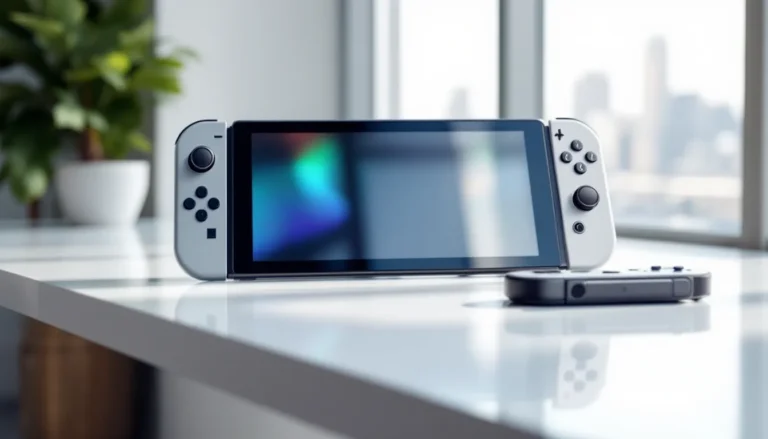
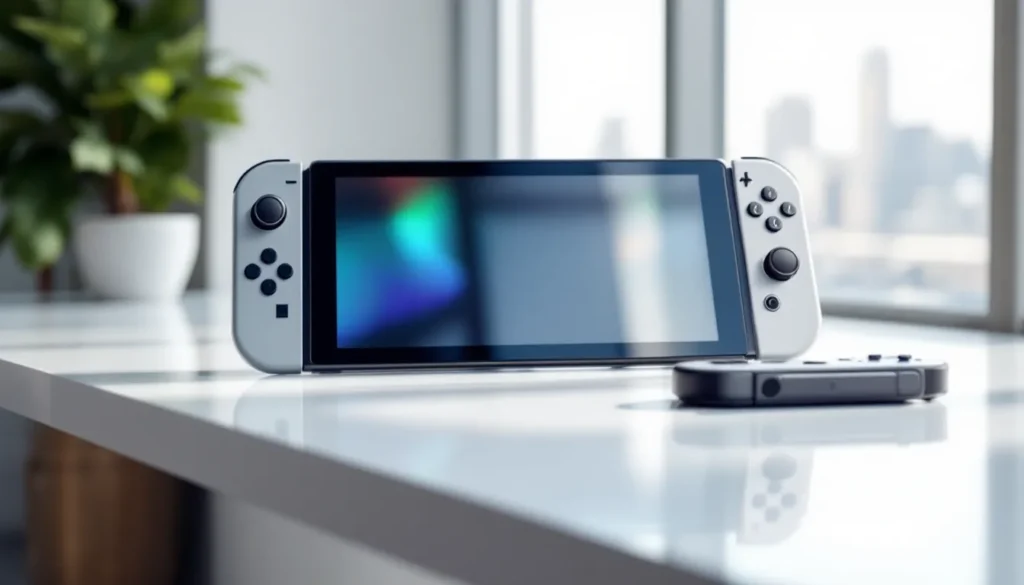
The Nintendo Switch 4K is Nintendo’s next-generation console, designed to succeed the current Switch and OLED models. Unlike the jump from Switch to OLED (which was primarily a display upgrade), the 4K console features a meaningful hardware overhaul under the hood.
At its core sits a significantly more powerful processor, moving away from the aging NVIDIA Tegra X1 chip to a newer, more efficient APU capable of pushing native 4K output when docked. The RAM has been increased to handle more complex games and higher-resolution assets simultaneously. Storage options remain flexible, with expandable microSD support continuing on the new model.
The console maintains backward compatibility with existing Switch games, meaning your library doesn’t become obsolete. But, individual games will need to be optimized or patched to take full advantage of the 4K rendering capabilities, this isn’t automatic, and not every title will receive updates.
On the physical side, the console retains the detachable Joy-Con design that made the original Switch iconic. But, the overall chassis has been refined for better thermals and durability. The unit is slightly more compact than the standard Switch while offering improved ventilation for sustained gameplay sessions.
Comparing Previous Models
To understand where the Switch 4K stands, here’s a quick comparison:
Original Nintendo Switch (2017): 1080p docked, 720p handheld, 6.2-inch screen, 4-6 hour battery, Tegra X1 processor
Nintendo Switch OLED (2021): Same resolution and performance as original, 7-inch OLED screen, improved battery, enhanced audio
Nintendo Switch 4K (2025): 4K docked, up to 1440p handheld, larger screen options, improved thermals, new GPU/CPU, 8-10 hour battery estimate
The OLED model was a refinement, it looked better but played the same. The 4K model is a proper generational upgrade. It’s the jump fans expected after the OLED’s more conservative update. Performance-wise, it sits between current-generation consoles like PS5 and Xbox Series X in raw power, but with the flexibility of handheld play.
Release Date and Pricing
Nintendo officially announced the Switch 4K in early 2025, with a confirmed launch window of holiday 2025. Specific release dates vary by region, but expect a simultaneous global roll-out in November or December, timed to capture the holiday shopping season.
Pricing hasn’t been officially locked down, but industry expectations center around $399-$449 for the base model, positioning it between the current OLED Switch (~$349) and entry-level next-gen consoles. Nintendo typically doesn’t discount heavily at launch, so expect to pay full price initially if you want in on day one.
Pre-orders are expected to open several weeks before the official release, likely through Nintendo’s official store, major retailers like GameStop, Best Buy, and Amazon, plus regional partners depending on your location. Given the hype and scarcity issues that plagued the original Switch launch, stock could be tight early on, if you’re keen to grab one, don’t sleep on pre-orders.
Nintendo has also hinted at a potential “Switch 4K Lite” variant launching later, targeting budget-conscious players who want 4K docking capability but don’t need the full experience. Pricing on that model would likely start around $299, though details remain thin. According to recent reporting from Gematsu, Japanese publishers are already preparing optimized versions of major titles for launch day, suggesting Nintendo’s launch library will be stronger than some expected.
Display and Graphics Improvements
CPU and Performance Upgrades
The hardware leap from original Switch to 4K is substantial. The new APU features a faster CPU core with more threads and a significantly improved GPU that’s roughly 3-4x more powerful than the Tegra X1. This isn’t incremental, it’s the kind of generational jump that actually changes what developers can attempt.
Clock speeds are reportedly higher across the board, allowing for sustained performance without aggressive thermal throttling. The new architecture also supports hardware ray-tracing (a feature previously exclusive to PS5 and Xbox Series X), meaning developers can create more realistic lighting and reflections without destroying frame rates.
Memory bandwidth has doubled, enabling faster asset loading and smoother transitions between handheld and docked modes. This is critical for the Switch’s hybrid nature, you’ll spend less time watching loading screens and more time playing.
Frame Rate and Resolution Benefits
When docked, the Switch 4K can output true 4K (3840×2160) at 60fps for optimized titles, or dynamic 4K (scaling between 4K and 1440p) to maintain higher frame rates in demanding games. Some titles will likely stick to 1440p at 60fps or 4K at 30fps depending on the developer’s priorities, there’s no one-size-fits-all approach.
In handheld mode, the larger screen (speculated to be around 7-8 inches, likely OLED) displays at up to 1440p, which is a massive visual upgrade from the original 720p handheld resolution. Games will look crisp and detailed without the compression artifacts common on older portable displays.
The real-world impact: a game like The Legend of Zelda: Breath of the Wild running at 1440p/60fps handheld is night-and-day compared to the original 720p/30fps experience. Competitive shooters benefit enormously from higher frame rates, and story-driven titles gain visual polish from sharper rendering. For anyone who’s played games across multiple Switch models, the 4K version will feel like a legitimately new experience. Games like Minecraft Game for Nintendo Switch will render draw distances with far greater clarity, and resource-intensive titles like ports of AAA games will finally hit 1080p+ on portable displays without compromise.
Battery Life and Thermal Efficiency
Battery improvements are critical for a more powerful handheld device. The Switch 4K packs a larger battery than previous models, likely around 4,550-4,650 mAh compared to the original’s 4,310 mAh and OLED’s 4,310 mAh. But, the real gain comes from improved efficiency.
The new processor uses smaller manufacturing nodes (likely 8nm or better, versus the ancient 20nm Tegra X1) and benefits from architectural optimizations that reduce power draw while maintaining performance. Nintendo targets 8-10 hours of mixed gameplay on a single charge, a meaningful improvement over the original’s 5-6.5 hours, especially given the added power.
Thermally, the redesigned chassis features larger heat dissipation zones and improved ventilation. The original Switch notorious for throttling during extended docked sessions, the 4K model addresses this with a more efficient cooling solution. Expect sustained high performance without the console thermal-throttling mid-game or becoming uncomfortably warm after marathon sessions.
USB-C charging remains standard, and the console charges slightly faster than predecessors thanks to improved power delivery support. If you already have third-party USB-C chargers that work with your current Switch, they’ll likely work with the 4K model (though Nintendo will still try to sell you an official adapter).
One practical note: the improved thermal efficiency means the console can handle sustained performance-demanding games without aggressive cooling fan noise. The fan remains, but it’s less likely to sound like a jet engine during stressful scenes.
Game Library and Backward Compatibility
All existing Nintendo Switch games will play on the Switch 4K, nothing in your library becomes unplayable. But, whether games look better depends on developer support. This is important to understand: backward compatibility doesn’t automatically mean visual improvements.
A game like Splatoon 3 or Mario Kart 8 Deluxe will run, but they might still render at their original resolution unless the developer patches the game to take advantage of 4K capabilities. Nintendo will likely incentivize first-party titles to receive upgrades, but third-party support is less guaranteed.
For launch titles and new releases, expect Switch 4K-optimized versions that leverage the hardware. Major publishers have already signaled their commitment, with reports from Siliconera confirming that prominent JRPG and action franchises are preparing day-one 4K patches or native versions.
How Games Will Take Advantage of 4K
Developers can approach 4K support in several ways:
Native 4K: Games render at full 3840×2160 resolution. This is demanding and more common for less graphically intensive titles like 2D platformers, turn-based RPGs, or strategy games.
Dynamic 4K: Resolution scales between 1440p and 4K depending on on-screen complexity. Most graphically advanced games will use this approach.
Upscaling: Games render at a lower resolution (1440p or 1080p) and upscale to 4K using temporal or spatial techniques. This is common for ports of PS4/Xbox One games.
Handheld Optimization: Instead of 4K, developers might prioritize 1440p at high frame rates for handheld play, which often matters more to players than raw resolution.
Bigger publishers are already signaling upgrade plans. Franchises like The Legend of Zelda, Metroid, Fire Emblem, and Animal Crossing will almost certainly receive patches or native optimizations. Third-party ports, especially from studios working on games that already exist on more powerful platforms, benefit enormously from the 4K hardware. Popular titles across genres featured on platforms like Pokemon Go Nintendo Switch will see renewed interest as the install base shifts to more powerful hardware.
Controller Features and Design
The Switch 4K retains the iconic Joy-Con design, but with meaningful refinements. The controllers remain detachable, supporting solo play, two-player split-screen with a single set, or paired with other controllers for larger groups.
Key improvements include refined trigger switches (addressing durability issues that plagued original Joy-Cons, where the sticks developed drift), improved haptic feedback motors with finer granularity, and enhanced latency performance for competitive gaming. The IR motion camera has been upgraded with better tracking accuracy and wider response windows.
Button responsiveness has been tightened across the board. For competitive players, this matters, faster input recognition translates to lower input lag in fighting games, shooters, and platformers. The new Joy-Cons will also be fully compatible with existing Switch titles, meaning your old controllers work on the 4K console (though without the upgraded features unless you buy new ones).
The Pro Controller has also been refreshed with the same button improvements, slightly adjusted ergonomics for longer sessions, and wireless connectivity improvements. Battery life on the Pro Controller remains around 40 hours per charge.
Physically, both Joy-Cons and Pro Controller maintain their familiar shapes. The 4K doesn’t radically alter the control scheme, it’s a refinement, not a reinvention. For players who’ve invested in arcade sticks, third-party controllers, or other peripherals, compatibility remains excellent. Joy-Con grip customization also continues, so players who prefer different button layouts or accessibility features have options. An AC Adapter Nintendo Switch upgrade to support faster charging on the 4K model may be worth considering if you plan to own the hardware for extended periods.
Handheld vs. Docked Performance
The Switch 4K’s real innovation isn’t just raw power, it’s how that power scales between handheld and docked modes while maintaining the same game experience.
Docked Performance: When connected to a TV, the console outputs at 4K (or dynamic 4K) with full processing capability. Games run at their highest visual fidelity and frame rates, competitive with dedicated home consoles.
Handheld Performance: The same game runs at 1440p (or lower, developer-dependent) with potentially reduced frame rates, but remains visually impressive on the larger screen. The key phrase: “playable without compromise.” Unlike the original Switch, where handheld play often meant noticeably reduced visual quality, the 4K model’s jump to 1440p handheld narrows that gap significantly.
The Practical Reality: Most games won’t have two entirely separate versions. Instead, developers will scale graphical settings, draw distance, shadow quality, texture resolution, particle effects, to maintain consistent frame rates across both modes. A 60fps target docked might scale to 60fps handheld with lower shadow quality. A 4K/30fps docked experience might become 1440p/30fps handheld.
This flexibility is why the Switch’s hybrid design remains compelling. You can start a game docked on your TV, detach the Joy-Cons, pop the console into a stand, and continue seamlessly in handheld mode with minimal visual or performance loss. For console-exclusive experiences like Baldur’s Gate 3 or The Witcher 3, eventually coming to Switch, the 4K model makes portable play genuinely viable without feeling like a compromise.
Thermal management is crucial here. The improved cooling ensures that handheld mode doesn’t trigger aggressive thermal throttling after 30 minutes of play, a problem the original Switch faced. You can play demanding handheld games for extended periods without performance degradation or heat concerns.
Should You Upgrade? Factors to Consider
The upgrade decision depends entirely on your gaming habits, current hardware, and priorities.
Keep Your Original Switch If: You primarily play on handheld and don’t care about visual fidelity. If you’re satisfied with 720p portable play and have a large library, there’s no functional reason to upgrade. Games will continue releasing for the current model. The OLED variant remains a solid option if you want a better screen without spending $400+.
Upgrade If: You game docked on a TV with a 4K display and want visuals that match your screen’s capability. If you’re into competitive shooters where higher frame rates matter, the 4K’s potential for 60fps+ gaming is a tangible advantage. If you plan to buy the console anyway as your primary gaming device, waiting for the 4K makes sense.
Consider Your Games: If your rotation includes mostly Nintendo first-party titles (Zelda, Mario, Animal Crossing, Splatoon), the 4K upgrade will enhance those experiences when optimized. If you play older or indie games, the visual jump might be less noticeable. Port heavy-hitters from other platforms (Witcher 3, upcoming AAA games) will absolutely showcase the 4K hardware.
Who Benefits Most From an Upgrade
Competitive Gamers: Higher frame rates and reduced input lag matter. The refined controls and potential for 60fps+ in fast-paced games directly impact performance.
Console Gamers with 4K TVs: If you’re already running a modern 4K display, having a console that actually outputs 4K is a logical progression. The visual difference is immediately apparent on compatible titles.
Handheld Enthusiasts: If you play more in portable mode than docked, the jump to 1440p and improved battery life is a significant quality-of-life upgrade. The larger screen option also matters for longer sessions.
Players Buying Their First Switch: If you don’t own a Switch yet, the 4K is worth waiting for. It’s the best version of the hardware and will have the longest support window before the next console arrives.
Social Gamers: If you host game nights with multiple players, the improved performance means less slowdown during chaotic multiplayer moments, better frame rates for games like Mario Kart, and less chance of thermal throttling during extended sessions.
Collectors: If you collect Nintendo hardware, the 4K is a must-have eventually. It’s the clear generational step forward.
Who Can Wait: Casual players satisfied with current performance, anyone actively enjoying their OLED Switch, and players on a tight budget. The current model remains capable and will receive game support for years. According to industry tracking from VGC, Nintendo’s support timeline for current hardware typically extends 5-7 years post-launch, so you won’t be abandoned if you stay on an older model.
Conclusion
The Nintendo Switch 4K represents the generational hardware leap the platform needed. With 4K docking, 1440p handheld capability, improved thermals, better controls, and meaningful performance upgrades, it’s a legitimate next step, not just a minor refresh like the OLED.
For existing Switch owners, the upgrade is worthwhile if you game on a 4K display, care about higher frame rates, or spend significant time playing portably. For anyone considering buying a Switch for the first time, waiting for the 4K model is the smart play.
The ecosystem remains strong: your existing games work, Joy-Cons are compatible, and Nintendo’s first-party lineup shows no signs of slowing down. Whether you jump day one or wait for stock to stabilize, the Switch 4K solidifies Nintendo’s position in the console market for the next generation.
Ready to jump into the Nintendo ecosystem? Check out Nintendo Switch Archives – Questtiny for ongoing coverage, reviews, and recommendations. For competitive experiences, popular titles like Sonic Forces Nintendo Switch deliver high-speed thrills that will feel even sharper on 4K hardware. And if you’re looking to enhance your library with cosmetics or in-game currency, a Nintendo Switch V-Bucks option provides convenient access to premium content. Also, make sure to explore options like Nintendo Switch Code for exclusive unlocks, and don’t overlook Nintendo Switch Amiibo collectibles that add depth to your favorite games.