
Table of Contents
ToggleYeah, you can watch YouTube on your Nintendo Switch, but it’s not as straightforward as firing up the app on your phone. The Switch doesn’t have a native YouTube application, which surprises a lot of people given how ubiquitous the platform is. But, there are several legitimate ways to stream your favorite videos, from livestreams to gaming tutorials, right on that 6.2-inch screen (or the bigger 7-inch OLED variant). Whether you’re looking to catch up on gaming content, watch esports coverage, or just chill with some YouTube while docked, we’ll walk you through exactly how to make it happen, what limitations you’ll run into, and whether the Switch is actually the best device for the job.
Key Takeaways
- You can watch YouTube on Nintendo Switch using the built-in web browser, though there’s no official YouTube app available on the device.
- YouTube on Nintendo Switch is capped at 1080p maximum resolution (realistically 720p without stuttering) due to the browser’s limitations, so 4K streaming is not possible.
- A stable internet connection of 10+ Mbps ensures smooth YouTube playback on the Switch without constant buffering or quality downgrading.
- The Switch’s browser method works best for casual gaming content, tutorials, and esports highlights—not as a primary video-watching device compared to dedicated streaming alternatives like Roku or Fire Stick.
- The hybrid handheld and docked functionality makes watching YouTube on Switch convenient for breaks between gaming sessions and provides portability for travel with approximately 5–6 hours of battery life.
- Common issues like buffering or sluggish performance can be resolved by moving closer to your Wi-Fi router, clearing the browser cache, closing bandwidth-heavy apps, and restarting your router.
YouTube on Nintendo Switch: What You Need to Know
Native YouTube App Availability
Let’s cut straight to it: Nintendo has never released an official YouTube app for the Switch. This isn’t an oversight, it’s a deliberate choice. The Switch runs a custom operating system, and Nintendo prioritized gaming performance over streaming apps. Unlike the Wii U, which had a dedicated YouTube app, the Switch was designed lean and gaming-focused. You won’t find YouTube in the eShop, and Nintendo hasn’t announced plans to add one.
That said, the Switch does have a built-in web browser. It’s hidden in the settings menu and isn’t flashy, but it’s fully functional and more capable than you’d expect. This is your primary gateway to YouTube on the console.
Streaming Compatibility and Limitations
Here’s the real talk: YouTube works on the Switch’s browser, but it’s not perfect. Nintendo’s browser is based on outdated browser technology, so newer, more demanding features sometimes don’t function as smoothly as they would on modern hardware. HTML5 video playback is supported, which means YouTube’s standard streams will play. But, 4K streaming is out of the question, you’re capped at 1080p at best, and realistically, the experience tops out around 720p without stuttering.
Ads still play, chat functionality works for livestreams, but some interactive features may be glitchy. The browser also doesn’t support certain plugins or extensions, so if a video relies on specific codecs or special features, there’s a chance it won’t load properly. For typical gaming content, tutorials, and straightforward uploads, you’ll be fine. For cutting-edge web tech? Not so much.
How to Access YouTube on Your Switch
Using the Web Browser Method
The web browser method is the most direct approach, and here’s exactly how to access it:
- From the Switch home screen, go to Settings (the gear icon).
- Scroll down to Internet, then select Internet Settings.
- Your connected Wi-Fi network will be listed, select it.
- At the bottom of the screen, you’ll see DNS Settings. Leave this on auto unless you have a reason to change it.
- Close out of settings and go back to the home screen.
- Open your user profile (your avatar in the top-left corner).
- Go to Profile Settings > User Page > Edit Profile.
- Find the Internet Connection Settings section and verify your connection is solid.
- Now here’s the trick: from the home screen, press the X button on the right side of the controller.
- You’ll see All Software, scroll to the very bottom and select Web Browser.
- Once in the browser, navigate to youtube.com in the address bar.
You’re now in YouTube. Use the ZR and ZL buttons to scroll, A to click, and the D-Pad for navigation. The experience is usable but clunky, the browser wasn’t designed with video streaming as the primary focus, so don’t expect mobile app-level responsiveness.
Tip: The browser remembers your login, so sign into your YouTube account once and you’re set for future sessions. Subscriptions, playlists, and watch history all sync.
Screen Mirroring and Casting Options
If the browser method feels too limited, screen mirroring opens up more possibilities. You can’t cast directly from YouTube to a Switch the way you would to a Chromecast or Apple TV, but you can do the reverse: mirror your Switch screen to a TV or external monitor, which amplifies the viewing experience significantly.
For undocked handheld viewing, this doesn’t apply, but if you’re docked, your TV likely has HDMI, so you’re already getting a decent picture. The Switch outputs at 1080p when docked (or 4K on the OLED model if using a compatible display), so what you see on that main screen is honestly what you’re getting.
Alternatively, you can use screen mirroring from your phone to your TV, then just play YouTube on the Switch’s browser while mirroring to a bigger screen. It’s a workaround, but it works. Some players also use capture cards or stream the Switch to a PC, which then displays YouTube, this is overkill for casual viewing but useful if you’re streaming your gameplay to Twitch or YouTube simultaneously.
Third-Party Apps and Workarounds
There’s a gray area here, and we need to be real with you: some people use custom firmware or homebrew solutions to load unofficial apps onto a jailbroken Switch. We’re not advocating for this, it voids your warranty, risks a ban from Nintendo’s online services, and introduces security risks. That said, it exists, and modded Switch communities do have YouTube clients available.
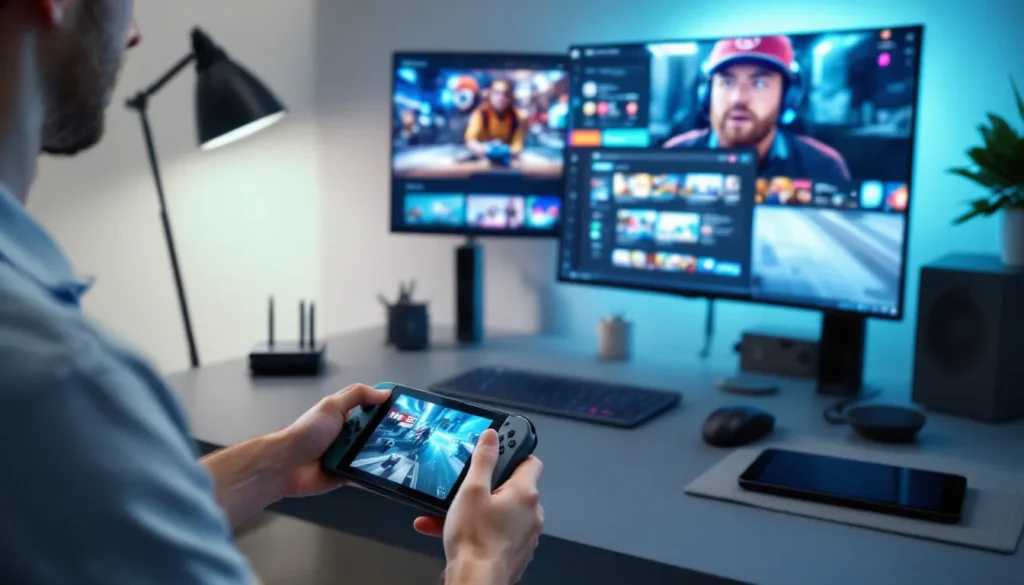
The legit workaround? Use a phone, tablet, or PC alongside your Switch. Many gamers keep a second device nearby to pull up guides, watch clips, or check out esports matches. It’s not as seamless as a native app, but it’s safe and reliable. Some players even set up a setup with two displays, one for the game, one for YouTube content streaming on another device. It sounds excessive, but competitive players do this regularly for tournament coverage or team commentary.
Performance and User Experience Considerations
Video Quality and Resolution Settings
When you’re watching YouTube on the Switch’s browser, you don’t get granular control over bitrate or codec selection the way you would on a dedicated device. YouTube’s adaptive streaming will automatically select the best quality based on your connection speed, but you can manually adjust quality in the video player settings.
On the Switch’s 6.2-inch screen (or 7-inch on OLED), 1080p is plenty sharp, the pixel density is actually impressive for a handheld. 720p will look fine in handheld mode, though you might notice some softness if you’re sitting close. When docked, 1080p is the practical limit due to the browser’s constraints, and it scales reasonably well to most living room TVs without looking blown-out or pixelated.
Here’s what matters: if your internet connection is solid (more on that next), YouTube will start you at an appropriate quality and stay there. You don’t need to fuss with settings unless you’re trying to save data or troubleshoot performance issues.
Internet Speed Requirements
For smooth YouTube streaming on a Switch, you’re looking at these minimums:
- 720p streaming: 2.5 Mbps recommended
- 1080p streaming: 5 Mbps recommended
- Smooth playback without buffering: 10+ Mbps (this is the sweet spot)
Most modern home networks hit these speeds easily, but if you’re on older Wi-Fi or far from your router, that’s where problems start. The Switch’s Wi-Fi antenna is decent but not exceptional, you might notice drop-offs if you’re playing in a bedroom far from the router compared to sitting in the living room next to it.
If you’re experiencing constant buffering or quality downgrading, move closer to your router or consider a Nintendo Switch using a wired connection through a USB-to-Ethernet adapter (though this adds extra hardware). Restart your router, close other bandwidth-heavy applications on your network, and check if other devices are downloading updates in the background. Small optimizations often solve stuttering issues.
Audio and Display Options
When the Switch is docked, audio routes through your TV speakers by default, which is convenient. If you want better sound, you can connect a Bluetooth speaker or headphones directly to the Switch (the console supports Bluetooth audio output). For handheld viewing, the Switch’s built-in speakers are decent for casual watching but obviously limited for immersive audio.
HDMI output on the dock handles audio passthrough, so if your TV supports surround sound or higher-quality audio codecs, that path is available. Most YouTube content is stereo anyway, so you won’t hit limitations there.
Brightness can be adjusted in settings, and the Switch’s screen is reasonably bright for handheld viewing. The OLED model has superior color accuracy and contrast, making it noticeably better for video content, if you’re buying a Switch partly for media consumption, OLED is worth the premium.
Comparing Switch Streaming to Alternatives
Dedicated Streaming Devices vs. Nintendo Switch
Let’s be honest: a dedicated streaming device like a Roku, Fire Stick, or Chromecast is purpose-built for YouTube and will outperform a Switch. They support 4K, have native apps, faster load times, and better interface design. A Fire Stick costs $40–60, and you’ll get a vastly smoother experience.
But, if you already own a Switch and just need occasional YouTube access without buying new hardware, the browser method works. It’s a “good enough” solution for casual watching.
Where the Switch does shine: it’s a gaming device first. If you’re taking breaks between gaming sessions and want to watch a quick esports highlight or gaming tutorial without context-switching to a different device, the Switch is convenient. You’re already holding it, already logged in, and the content loads in seconds. That convenience factor matters more than raw performance for many players.
Handheld and Hybrid Streaming Solutions
The Switch’s hybrid nature, playing handheld or docked, is actually its strength for streaming in certain contexts. You can watch YouTube in bed, on a couch, or at a desk without needing a separate tablet or phone. For travel, the Switch offers portability and battery life (around 5–6 hours of video playback on the standard model) that beats carrying a laptop.
Compare this to a tablet: an iPad or Android tablet offers better web browsing, faster performance, and often better speakers, but you’re carrying two devices if you’re also bringing a Switch for gaming. If you’re going on a trip and want one device for both gaming and casual video watching, the Switch makes sense.
The Steam Deck is another competitor, it runs full Windows and has access to all desktop apps, including a real web browser. For travelers or portable gaming enthusiasts, the Deck handles YouTube flawlessly because it’s literally a PC in handheld form. The tradeoff: it’s heavier, bulkier, and more expensive than a Switch. For pure Switch gaming plus light YouTube watching, the Switch wins. For everything else, dedicated devices usually win.
Best Practices and Tips for YouTube on Switch
Optimizing Your Connection and Setup
Before settling in for a YouTube session, run through a quick checklist:
- Position your Switch near your router or ensure you have strong Wi-Fi signal strength (you can check this in Settings > Internet Settings).
- Close other bandwidth-heavy apps on your network. If someone’s uploading a large file or streaming Netflix, that impacts your Switch’s YouTube experience.
- Restart your router if you notice sluggishness. This clears the router’s memory and can resolve temporary connection issues.
- Use 5GHz Wi-Fi if available. Most modern routers broadcast dual-band (2.4GHz and 5GHz). The 5GHz band is faster but has shorter range, test both and see which gives you better stability.
- Keep the browser cached. The first load of YouTube might take 10–15 seconds. Subsequent sessions load faster because the browser caches assets.
- Turn off background downloads. If your Switch is queued to download updates or new games, it’ll throttle bandwidth. Pause these before streaming.
If you’re docking the Switch for a longer viewing session, make sure the dock has good ventilation. The console won’t overheat from video playback, but sustained gaming + YouTube can tax the system, so adequate airflow is good practice.
Troubleshooting Common Issues
“YouTube won’t load at all”
- Clear the browser cache (Settings > Internet Settings > Internet Connection Settings > DNS Settings > Clear DNS Cache).
- Restart the browser and try again.
- Check Nintendo’s server status: occasional maintenance windows can block access.
“Videos buffer constantly”
- Move closer to your router.
- Reduce video quality manually in the player settings (click the quality icon in the video player).
- Close other apps and devices using your network.
- Restart your router.
“Audio cuts out but video keeps playing”
- This is rare but can happen with codec mismatches. Try a different video, the issue usually clears up.
- Restart the browser.
- Check if your Bluetooth headphones are connected: disconnect them and use the Switch speaker instead.
“Browser feels sluggish or crashes”
- The Switch’s browser can struggle with heavy JavaScript or ad-intensive pages. Clear cache, close extra tabs, and restart.
- If you’re experiencing frequent crashes, consider Unable to Start Software Nintendo Switch? issues, while that page covers software launch problems, the troubleshooting mindset (restarting, clearing cache) applies to browser issues too.
“Login keeps timing out”
- YouTube sessions expire after extended idle time. Log back in. The browser should remember your credentials if you check “Stay signed in.”
Maximizing Your Viewing Experience
Pro tips for the best YouTube experience on Switch:
- Watch gaming content and tutorials. These are the natural fit, the Switch is designed for gamers, so gaming-focused content feels native.
- Use playlists and watch later lists. Build these on desktop or mobile, then consume them on your Switch. It reduces friction in the UI.
- Adjust brightness for your environment. In a dark room, low brightness is easier on the eyes. In bright daylight, crank it up. The OLED model handles contrast better in varied lighting.
- Consider a dock with a stand. The default dock works, but angled stands make handheld propping easier if you want to watch hands-free.
- Disable notifications while watching. Go to Settings > Notifications and turn off alerts so your viewing isn’t interrupted by friend requests or game achievements.
- Use a gaming-focused site like Nintendo Life to find curated YouTube channels worth following, reviews, guides, and Nintendo news from trusted creators.
- For competitive gaming, watch esports replays or tournament footage to analyze strategies. The Switch’s screen is small for esports analysis, but for studying meta or watching highlights, it works fine.
One more thing: if you’re watching YouTube on your Switch and also playing games, don’t expect peak performance in both simultaneously. The Switch isn’t a multitasking powerhouse. Close YouTube when you launch a game, and vice versa.
Conclusion
Can you watch YouTube on Nintendo Switch? Yes, but with caveats. There’s no official app, the browser experience is functional but not premium, and you’re capped at 1080p streaming. For casual viewing, esports highlights, and gaming tutorials, it’s solid. For your primary video-watching device, a dedicated streaming solution beats it hands down.
The real value of YouTube on Switch is convenience. You’re already holding the device, already logged into your account, and you can jump between gaming and watching without context-switching. For long road trips, handheld sessions on the couch, or quick reference checking during gameplay, it fills a niche.
If you’re new to the Switch ecosystem, explore what the console actually excels at, gaming, and use YouTube as a secondary feature. If you’re already a Switch player and want to maximize your device’s functionality, the browser method costs nothing and adds value. Just manage your expectations on video quality and UI responsiveness, keep your internet connection strong, and you’ll get what you need out of it.
The Switch continues to be one of gaming’s most versatile devices. YouTube might not be its killer feature, but having the option makes it more useful for the lifestyle of modern gamers.