
Table of Contents
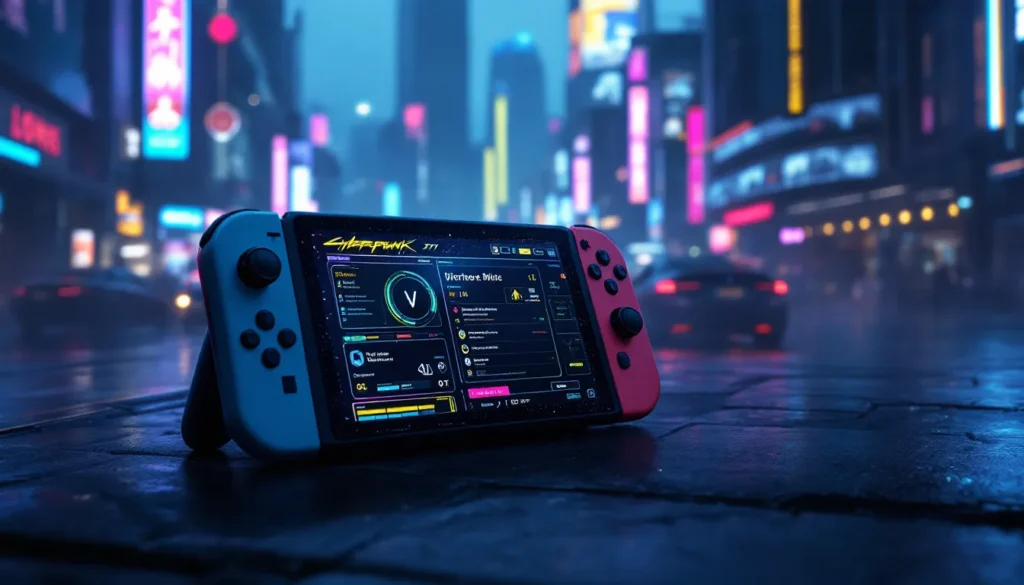
ToggleThe Nintendo Switch has become a proving ground for ambitious ports, but when Cyberpunk 2077 launched on the handheld console in 2023, it raised eyebrows. Here was a game that famously stumbled on day one for PC and consoles, now arriving on hardware that had half the processing power of a PS4. Yet after two years of patches, optimizations, and updates, Cyberpunk 2077 on Nintendo Switch has evolved into something genuinely playable and, for portable gamers, surprisingly impressive. Whether you’re curious about the technical wizardry CD Projekt Red pulled off or trying to decide if the Switch version deserves a spot in your library, this guide covers everything: the journey from troubled launch to stable port, performance metrics you actually care about, how it plays with Joy-Cons, what content you’re getting, and whether it’s worth your time and money in 2026.
Key Takeaways
- Cyberpunk 2077 on Nintendo Switch delivers the full game—including all story campaigns, side quests, and Phantom Liberty DLC—proving that a complete AAA experience can run on portable hardware despite technical compromises.
- The Switch version targets 30 FPS at 720p-900p docked and 540p-720p handheld, making it technically inferior to PS5 and PC but visually acceptable for a single-player RPG thanks to strong art direction and color-driven aesthetics.
- CD Projekt Red’s optimization strategy used streaming technology and asset reduction rather than content cuts, allowing the game to run on Switch without sacrificing gameplay mechanics like character building, hacking, and dialogue choices.
- Cyberpunk 2077 on Nintendo Switch is ideal for frequent travelers and Switch-primary gamers seeking portable immersion, but PC and PS5 owners should experience the story there first before replaying on handheld.
- Load times of 45-90 seconds on startup and 15-30 seconds per area transition are the most noticeable trade-off on Switch, though the game is stable and crash-free as of March 2026 with proper patches installed.
- The Switch port represents a redemption arc for Cyberpunk 2077, transforming a game infamous for its broken launch into a proof-of-concept that even 2020 AAA titles can be successfully optimized for Nintendo’s 2017 hardware.
What Is Cyberpunk 2077 And Why The Switch Version Matters
Cyberpunk 2077 is a first-person RPG set in Night City, a fictional metropolis ruled by corporate megacorps and crime syndicates. You play as V, a customizable mercenary caught between personal ambition and a lethal chip implant that’s slowly killing you. The gameplay loop blends shooting mechanics with dialogue trees, stealth, hacking, and side quests that often rival the main story in depth. Think immersive sim meets action RPG.
When the game launched in December 2020 on PC, PS4, and Xbox One, it became infamous for bugs, crashes, and performance dips that made some versions nearly unplayable. Sony even delisted it from the PlayStation Store. Yet underneath the rough launch was a genuine masterpiece, a world dense with lore, characters with conflicting motivations, and systems that rewarded experimentation.
The Switch version matters because it opens Cyberpunk 2077 to a different audience: players who game primarily on a portable device, people who travel, and those who want to experience Night City on a handheld without sacrificing content. It’s not a stripped-down mobile game: it’s the full campaign, all DLC, and all systems running on hardware you can take anywhere. That’s a technical achievement worth understanding, even if you’re on other platforms.
The Journey From Troubled Launch To Switch Port
The original Cyberpunk 2077 launch was a cautionary tale. CD Projekt Red bit off more than they could chew: the game’s scope exceeded the team’s capacity to test and optimize before December 10, 2020. Performance on base-model consoles was abysmal, sub-30 FPS, pop-in textures, NPCs walking through walls. The game became a symbol of broken releases and inflated pre-order culture.
But CD Projekt Red committed to fixes. Patch 1.5 in February 2023 was the turning point, introducing Nvidia DLSS support on PC and major performance upgrades across platforms. By mid-2023, the company was confident enough to announce a Nintendo Switch port, a gutsy move that required novel optimization techniques.
How CD Projekt Red Optimized The Game For Nintendo Hardware
Getting a 2020 AAA game running on Switch was less about cutting features and more about rethinking how assets load and render. CD Projekt Red partnered with Saber Interactive, the studio behind the Linux port of Doom (2016) and The Witcher 3 on Switch, so they had experience shrinking AAA games.
The optimization hinged on streaming technology. Rather than loading entire zones into memory, the game streams environments in chunks as you move through Night City. Textures are lower resolution, not cartoonishly bad, but noticeably softer than PC or PS5. Character models maintain detail because that’s what you see most. The draw distance is reduced, meaning fog and visual shortcuts hide the limited horizon, but it preserves the sense of scale.
CD Projekt Red also reduced NPC density in crowded areas, simplified physics for vehicles and objects, and disabled some of the fancier visual effects like ray-traced reflections and volumetric fog. These aren’t arbitrary cuts: they’re surgical decisions that preserve what makes Cyberpunk 2077 Cyberpunk while fitting the hardware budget. The game runs on Unreal Engine 4, which gave the team more tools than if they were rewriting in a lower-level engine. Still, the work was substantial, they didn’t just lower sliders in an engine menu. This was a rebuild.
Performance And Graphics On The Switch
Let’s be blunt: Cyberpunk 2077 on Switch doesn’t look like it does on PS5 or high-end PC. But it’s not supposed to. The question isn’t “does it look perfect?”, it’s “does it look acceptable while running full-sized games like this on a mobile APU?”
Frame Rate, Resolution, And Visual Compromises
The Switch version targets 30 FPS in docked mode and 25-30 FPS in handheld mode, with dynamic resolution scaling that prioritizes frame consistency. When docked, the game renders at 1080p during cutscenes and dialogue-heavy moments, dropping to 720p-900p during combat or crowded areas. Handheld mode drops further, typically 540p-720p depending on scene complexity.
30 FPS isn’t smooth by 2026 standards, gamers on other platforms playing at 60+ FPS will notice the difference immediately. But for a single-player, dialogue-driven RPG where you’re not tracking enemy positions in milliseconds (unlike, say, a competitive shooter), 30 FPS is acceptable. The frame pacing is generally consistent: stutters happen but rarely during critical moments.
The visual hit is real. Shadow quality is lower. Reflections on wet pavement won’t be ray-traced. The neon glow of Night City’s signs and holograms gets toned down, though the art direction still shines through. Character models during conversations retain skin detail and facial expressions, which matters because you’re staring at faces during story beats. Environmental textures are the biggest casualty, surfaces look a generation older, but because you’re moving through the world in first-person, you’re not scrutinizing every wall at close range.
Compare this to Alien Isolation Nintendo Switch, which also demanded heavy optimization on Switch: Cyberpunk 2077’s concessions are similar in scope but tackled differently given the genre.
Handheld vs. Docked Mode Performance
Docked mode is the superior experience. The higher resolution and steadier frame rate make a noticeable difference in readability during text-heavy dialogue scenes. If you plan to spend 40+ hours in Night City, docking your Switch for story missions and main quests is recommended.
Handheld mode is where the Switch shines, portability. The reduced resolution is jarring if you’re coming from docked play, but it’s acceptable if you manage expectations. Smaller screen means pixels matter less. Playing Cyberpunk 2077 on a train or during your lunch break is genuinely magical, even if the image isn’t as crisp. The game runs in handheld without significant performance regression compared to docked, which is impressive given the hardware constraints.
Heading into crowded areas (Kabuki, the Heywood district) will trigger frame drops in both modes. Performance is more unstable during sandstorm weather effects and when multiple NPCs are on screen. These moments are rare enough that the game doesn’t feel unplayable, but they’re noticeable.
Gameplay Experience And Controls On The Switch
Cyberpunk 2077 is a complex game with keybinds for dialogue, items, quickhacks, and vehicle controls. Translating that to Joy-Con feels like a miracle, but CD Projekt Red made it work, not perfectly, but competently.
Controller Mapping And Adaptations
You can’t have a full keyboard remapped to Joy-Con buttons, so the game prioritizes context. The radial menu (weapon selection, quickhacks, consumables) is accessed via a hold of the right trigger, then you flick the stick to select. It’s slower than clicking on a keyboard, but it works. Dialogue options appear on-screen with button indicators (Y for top, X for bottom, etc.), which is standard. Aiming down sights (ADS) is mapped naturally to a trigger.
Hacking is adapted for controller, you hold a button to enter a security camera or terminal, then use the stick to select programs. On PC, this would be a quick mouse hunt: on Switch, it’s methodical but slower. Story-critical hacking never punishes speed, so this doesn’t break quests, just makes them feel less frantic.
Driving feels off compared to other platforms. The Joy-Con’s analog stick is precise, but driving a vehicle with tight stick sensitivity requires adjustment. The game defaults to arcade-style driving (which helps), but don’t expect the precision you’d get with a full-sized controller stick. Most players adapt within an hour of driving sequences.
The interface is readable on Switch. Text sizes are manageable even in handheld mode, though the information density on menus is high. You’re not hunting for tiny buttons: the UI scales well.
Load Times And Stability
Load times are the elephant in the room. The Switch version takes 45-90 seconds to boot the game, and entering/exiting areas adds another 15-30 seconds depending on location. This is because streaming from cartridge or SD card is slower than from a console’s internal SSD. If you’re used to PS5’s snappy loading (which is almost instant for Cyberpunk), the Switch feels glacial.
Once you’re in-game, most transitions are cached well enough that you won’t stare at loading screens mid-mission. Traveling by vehicle or fast-travel is faster. Dying and reloading from a checkpoint is where you’ll feel the wait.
Stability has improved significantly since launch. The early builds (2023-2024) had occasional crashes and texture pop-in that bordered on immersion-breaking. As of March 2026, the game is genuinely stable. Crashes are rare, most players report zero crashes in 30+ hour playthroughs. Texture streaming works most of the time, though occasional NPCs will spawn as wireframes or load models delayed. This is a quirk, not a bug.
The game auto-saves frequently (after story beats, when entering new areas), so you won’t lose progress even if something does go sideways. Manual saves and quick-saves work as expected.
Game Content And Features: What You Get
Here’s the critical question: is this the same Cyberpunk 2077 or a reduced version?
Story Campaigns, Side Quests, And DLC Availability
You get the full main campaign, all three life paths (Street Kid, Nomad, Corporate), all story missions, and the ending variations. The game doesn’t cut content: it’s the same 30-40 hour campaign. If you’ve never played Cyberpunk 2077, the story is phenomenal: morally gray characters, corporate espionage, a love story that hits hard, and a climax that respects your choices across the game. Phantom Liberty DLC is also included, adding 15-20 hours of additional story missions.
Side quests are there too, the optional missions that give Cyberpunk 2077 its depth. These include romance storylines (Judy, Panam, River, etc.), gigwork for different fixers, and oddball one-offs that range from heartfelt to darkly humorous. GameSpot reviews and Metacritic both highlight Cyberpunk’s side content as a major strength, and the Switch version includes all of it. Nothing is cut, just technically compromised.
Perk trees are intact. You can build a character but you want: netrunner (hacking), gunslinger, melee-focused, stealth operative. Each playstyle is viable. Gear, crafting, and modifications work as intended. The game doesn’t lock content behind platform-specific paywalls, you’re getting the same character building as PC.
Multiplayer And Online Features
Cyberpunk 2077 isn’t a multiplayer game, so this section is straightforward: there’s no PvP, no co-op, and no multiplayer servers to worry about. The game is entirely single-player story and exploration. The planned multiplayer component that was supposed to launch post-release was cancelled: CD Projekt Red is focusing on single-player expansion and updates instead.
Online connectivity is used for optional features: you can share character builds in the community hub, and future updates (like the 2026 expansion being developed) will roll out over the internet. But none of this is required to play. You can complete Cyberpunk 2077 on Switch with the console in airplane mode if you want.
Should You Play Cyberpunk 2077 On Switch? Honest Assessment
This is the pragmatic question. The Switch version is legitimate, but it’s the worst version from a technical standpoint. So when does it make sense?
Who The Switch Version Is Best For
Buy it on Switch if any of these describe you:
- You game primarily on Switch. If you own a Switch and rarely use PC or other consoles, Cyberpunk 2077 is an exceptional addition to your library. It justifies the handheld’s capability.
- You travel frequently. This is the killer app. Playing a 50-hour RPG anywhere, anytime, is a luxury. Planes, trains, coffee shops, Night City is accessible.
- You want to replay Cyberpunk 2077. If you’ve beaten it on PC or PS5, the Switch version offers a fresh perspective without buying a new platform.
- You’re price-sensitive and already own a Switch. The game periodically goes on sale on eShop. If you grab it at $30-40 instead of $50-60, the value proposition improves.
Don’t buy it on Switch if:
- You want the best visual or performance experience. PC or PS5 are objectively better. Period.
- You’re hypersensitive to frame rate. 30 FPS will bother you more the longer you play. Competitive games this isn’t, but a smooth 60 FPS on other platforms is noticeably better.
- You haven’t played Cyberpunk 2077 and own a capable PC or PS5. Start there, then revisit on Switch if you loved it.
Comparing Switch Performance To Other Platforms
Let’s quantify it. Cyberpunk 2077 on:
- PC (high-end rig, RTX 4090): 60+ FPS, 4K, ray-traced, fully loaded. The gold standard.
- PS5: 60 FPS in performance mode, 4K, ray-traced reflections. Excellent balance of visual fidelity and smoothness.
- Xbox Series X: Comparable to PS5. Functionally identical.
- Switch: 30 FPS, 720p-900p docked (540p-720p handheld), no ray-tracing, reduced draw distance. The floor of capability, but not broken.
The gap is real, but it’s not a failure. Cyberpunk 2077’s art direction carries the visual load, the neon-soaked aesthetic of Night City survives resolution cuts because the colors, lighting, and design are strong. You’re not playing a blurry mess: you’re playing a compressed, optimized version that maintains the spirit of the original. Think of it like watching a 1080p Blu-ray instead of a 4K restoration: it’s clearly lower quality, but the movie is still the movie.
Platform availability matters too: if you’re jetlagged in a hotel with only your Switch, Cyberpunk 2077 beats having nothing to play. Comparing it to PS5 on a comfort couch is apples-to-oranges. Context is everything.
Tips And Tricks For The Best Switch Experience
You’ve decided to jump in. Here’s how to maximize your time in Night City on the handheld.
Optimization Settings And In-Game Adjustments
Under Settings > Graphics, you’ll find performance vs. quality toggles:
- Prioritize Performance: This locks frame rate and accepts lower resolution. Choose this unless you’re docked and stationary.
- Prioritize Quality: This prioritizes resolution but allows frame dips. Only choose this if you’re cool with occasional stuttering for sharper visuals.
Neither is objectively better: it depends on your tolerance. Most players find Performance mode less distracting after 10 minutes of adaptation. Graphical features you can’t adjust individually (texture quality, draw distance) are baked into the optimization, so there’s no menu fine-tuning beyond this toggle.
Motion blur can be disorienting in first-person mode. If you feel motion sickness during driving or combat, disable it in Settings > Gameplay. This is a huge quality-of-life tweak that many players overlook.
Input responsiveness is worth adjusting if you’re using the Joy-Con stick. Under Settings > Input, reduce stick deadzone if you want snappier aiming. The default deadzone is forgiving (beginner-friendly), but for combat, tightening it helps precision. Experiment in a side quest before tweaking during story missions.
Contrast and brightness can be cranked up if you find Night City too dark on handheld. The Switch’s screen is decent, but outdoor lighting can wash out on bright days. Adjust in Settings > Video.
Storage Requirements And Installation Guide
Cyberpunk 2077 requires 90-100 GB of storage. Your Switch likely has 32 GB internal: you’ll need a microSD card, minimum 128 GB (ideally 256 GB or larger if you play other games).
Installation steps:
- Insert microSD card into the Switch dock’s microSD slot (backside of dock, below the back panel).
- Open eShop, search “Cyberpunk 2077,” and purchase.
- Download starts immediately. It’ll take 2-4 hours depending on internet speed.
- Once downloaded, the game installs to your microSD card automatically. Don’t pull the card during this process.
- You’ll get a prompt to update to the latest patch (currently version 2.14 as of March 2026). Download this, it’s 1-2 GB and fixes bugs and stability issues. Don’t skip it.
- Once patched, launch the game, go through character creation, and you’re in Night City.
If your microSD card fills up, you can manage storage via System Settings > Data Management, but Cyberpunk 2077 is fully playable without uninstalling anything else (as long as it’s your primary game). If you own other massive games (Minecraft Game for Nintendo Switch is another 3+ GB hog), budget accordingly.
The game auto-saves frequently, every few minutes after story beats or area transitions. You don’t need to manually save obsessively, but it’s good practice after long play sessions.
Common Issues And Troubleshooting
The Switch version is stable, but edge cases exist. Here’s what you might encounter and how to fix it.
Crashes, Bugs, And Known Problems
Texture Corruption or Missing Models: Rarely, NPCs load as floating wireframes or textures fail to stream. This is frustrating but temporary, walk away and return to the area. The textures usually load correctly on second attempt. If it persists, reboot the game.
Frame Rate Drops in Crowded Areas: Kabuki district, stadium events, and bazaars can tank frame rate to 20 FPS. This is a known limitation of the hardware. It’s most noticeable during photo mode or cinematics. Future patches may improve this, but don’t expect miracles.
Controller Drift or Stick Sensitivity Issues: If your Joy-Con stick feels unresponsive, go to Settings > Controllers > Calibrate Control Stick and follow the prompts. Switch hardware joy-stick drift is a separate issue from the game itself, but recalibrating sometimes helps.
Game Won’t Boot After Update: Delete the shader cache. Go to Settings > Data Management > Cyberpunk 2077 > Manage Save Data. Select “Clear Shader Cache.” The game will recompile on next boot (adds 5 minutes to startup). This fixes boot loop crashes 90% of the time.
Audio Desync: In rare instances, dialogue audio lags behind lip-sync. This is usually temporary. Reload from your last save.
Crashes During Loading: If the game crashes when entering new areas, your microSD card might be struggling. Try moving the game to internal storage temporarily (System Settings > Data Management > Move Data) if you have space, or replace your microSD card if it’s old or damaged.
How To Report Issues And Access Support
CD Projekt Red monitors community reports via:
- Official CD Projekt Red Support: Visit support.cdprojektred.com, select “Cyberpunk 2077,” and submit a ticket with your issue, Switch firmware version, and game version (visible in System Settings > Data Management for Cyberpunk 2077).
- Reddit Communities: r/cyberpunkgame and r/NintendoSwitch are active communities where you can post issues. Moderators and community members often have solutions for known bugs.
- Eurogamer’s Technical Analysis and Digital Foundry: For broader technical discussions and comparisons across platforms.
Provide specific details: What were you doing when it crashed? Which area were you in? What’s your Switch model (original, Switch Lite, Switch OLED)? Better information = faster solutions. CD Projekt Red prioritizes crash reports over cosmetic glitches, so if you hit a hard bug, report it.
Don’t expect day-one hotfixes for minor issues. CD Projekt Red rolls patches monthly, combining several reports into numbered updates. Version 2.14 (current as of March 2026) is stable: future patches will address edge cases.
Conclusion
Cyberpunk 2077 on Nintendo Switch is a technical marvel that shouldn’t exist, a 2020 AAA game running on 2017 hardware without gutting its soul. The visuals are compromised, frame rate is half of what PS5 offers, and load times are glacial. Yet the campaign is intact, the characters are compelling, and the ability to play Night City on a handheld is genuinely transformative for portable gamers.
You’re not getting the prettiest version of Cyberpunk 2077. You’re getting the most accessible one. If you game primarily on Switch, travel frequently, or want to replay the story on different hardware, the Switch version is worth every penny. If you own a capable PC or PS5 and haven’t played Cyberpunk 2077 yet, start there, but keep the Switch version in mind for a second playthrough.
As of March 2026, the game is stable, well-patched, and genuinely playable for 50-70 hour adventures. The journey from “unplayable at launch” to “surprisingly solid on the weakest platform” is a redemption arc worth respecting. CD Projekt Red proved that even in 2026, with technology moving fast, a team can salvage and optimize what seemed impossible.
Night City is waiting. Choose your life path, customize V, and experience one of gaming’s most ambitious stories wherever you are. The Switch might not be the platform CD Projekt Red imagined, but it’s the one in your pocket.