
Table of Contents
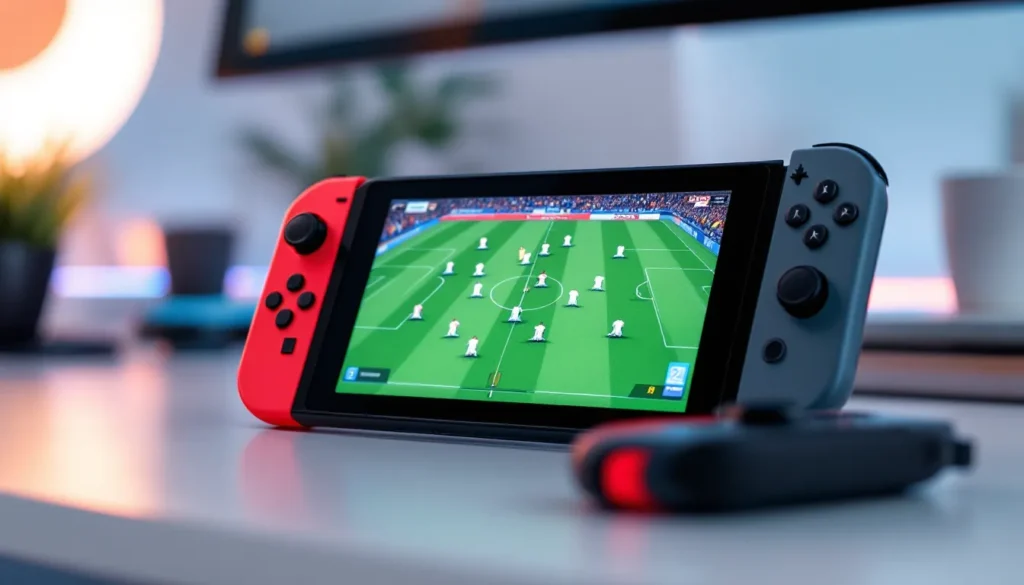
ToggleFIFA 22 on Nintendo Switch has carved out its own niche in the sports gaming landscape, offering portable soccer action that lets you build squads, compete online, and manage your dream club from anywhere. Whether you’re a dedicated Switch owner or curious about how FIFA 22 performs compared to its PS5 and Xbox counterparts, there’s a lot to unpack. The Switch version isn’t a direct port of the current-gen experience, it’s a different beast entirely, with distinct limitations and strengths that deserve honest discussion. This guide covers everything you need to know to maximize your FIFA 22 experience on Switch, from installation and gameplay mechanics to Ultimate Team strategy and troubleshooting common issues.
Key Takeaways
- FIFA 22 on Nintendo Switch runs at 30 fps in handheld mode and 1080p when docked, delivering a different but stable gaming experience compared to PS5 and Xbox versions.
- Master offensive play by balancing sprinting, using first-time passing, and perfecting finesse shots and timed finishing to score consistently in FIFA 22.
- Build competitive Ultimate Team squads on a budget by prioritizing pace and shooting stats, grinding Squad Battles, and flipping cards on the transfer market rather than spending real money on packs.
- Career Mode offers deep engagement through player development, youth academy management, and multi-season progression without the grinding of online competitive modes.
- Use a USB-to-Ethernet adapter to eliminate Wi-Fi instability and improve online matchmaking reliability, since the Switch’s wireless connection can cause disconnections during matches.
- FIFA 22 on Nintendo Switch remains a solid, affordable choice in 2026 for portable soccer gaming, especially for single-player content and casual-to-intermediate online competition, though the frozen meta and smaller playerbase mean it’s secondary to current-gen versions.
What Is FIFA 22 And Why It Matters For Switch Players
FIFA 22 is EA Sports’ annual soccer simulation, and on Nintendo Switch, it’s built on a modified engine compared to PS5 and Xbox Series X
|
S versions. The Switch version uses the Legacy version architecture, which means it prioritizes stability and performance over cutting-edge graphics and certain next-gen features. This matters because Switch players are getting a fundamentally different game, one that’s been optimized for portability and the console’s hardware constraints.
The appeal is straightforward: FIFA 22 lets you live the fantasy of managing your favorite club, assembling a dream squad in Ultimate Team mode, or playing quick matches on the go. The Switch’s hybrid nature means you can dock it for a bigger screen experience or undock and play in handheld mode during a commute. For soccer fans without access to other platforms, FIFA 22 on Switch is the definitive portable option. It’s also worth noting that FIFA 22 was among the last standalone FIFA titles, EA rebranded to EA Sports FC starting in 2023, so if you’re nostalgic for the FIFA branding, Switch owners still have legitimate reasons to return to this 2021 release. The game maintains active online communities for multiplayer, though you should expect smaller player pools compared to current-gen consoles.
Key Differences Between FIFA 22 Switch And Other Platforms
FIFA 22 on Switch occupies a different tier entirely from the PS5 and Xbox Series X
|
S versions, which run on the Frostbite engine with significantly more advanced graphics and game modes. Understanding these differences is crucial before committing to the Switch version.
Graphics And Visual Performance
The Switch version runs at 1080p when docked (720p in handheld mode) with a 30 fps cap, compared to current-gen versions running 4K at 60 fps. This immediately sets expectations: you’re not getting photorealistic player models or stadium lighting that’ll blow you away. The trade-off is that the game remains stable in handheld mode, which matters for portability. Player animations are simplified, crowd detail is reduced, and grass texture lacks the crisp definition of other platforms. That said, the art direction keeps the game visually coherent and readable during play, you won’t struggle to track passes or read the field. The Switch version uses lower-resolution textures throughout, and weather effects are less pronounced. If you’re coming from PS5, expect a step down. If you’re upgrading from last-gen Switch titles or mobile soccer games, you’ll notice a jump in quality.
Frame rate consistency is surprisingly solid in standard modes like Squad Battles and Career Mode. Online multiplayer can see occasional dips during intense matches with heavy particle effects, but nothing game-breaking. The 30 fps ceiling feels less responsive than 60 fps, especially when trying to perform finesse dribbling or rapid skill moves, but most players adapt quickly.
Game Modes And Features Available
Here’s where platform differences really matter. The Switch version includes Ultimate Team, Career Mode, Pro Clubs (online multiplayer where you control a single player), and Standard Matches, the core modes you’d expect. But, some current-gen exclusive features don’t exist on Switch: Volta Football (street soccer mode) is absent, and features introduced in later patches for other platforms may not make it to Switch.
Ultimate Team on Switch uses the same card-based squad-building system as other platforms, with access to the same player pools and league tournaments. You can trade on the transfer market and compete in weekend leagues, though the switch version’s squad rank matchmaking may pair you differently than on current-gen. Career Mode lets you manage clubs and develop players across multiple seasons, but the depth of tactical options is slightly reduced compared to PS5 versions. The lack of PlayStation 5 exclusive features (like DualSense haptic feedback) is obvious, but the gameplay loop remains intact.
One critical difference: cross-platform progression doesn’t exist. If you play FIFA 22 on Switch and then move to PS5, your Ultimate Team, progress, and coins don’t transfer. You’re starting fresh on any new platform.
Online Play And Connectivity
Online multiplayer on Switch requires a Nintendo Switch Online subscription (separate from Xbox Game Pass or PlayStation Plus). Connection quality depends heavily on your internet and whether you’re using Wi-Fi or a wired connection (via USB adapter). The Switch’s Wi-Fi chipset isn’t the most robust, so serious online players often invest in a USB-to-Ethernet adapter for stability. Lag and disconnections are more common on Switch than on current-gen consoles, particularly during weekend league play when servers are busiest.
Matchmaking can feel slower on Switch due to the smaller player base. During off-peak hours, you might wait longer to find opponents. Once you’re in a match, latency varies, sometimes it’s smooth, sometimes you’ll notice input delay that makes defending trickier. This is worth factoring in if you’re competitive in online seasons or weekend leagues. The game supports local multiplayer for offline matches, which works flawlessly since there’s no network dependency.
Getting Started: Installation And Setup For Nintendo Switch
Getting FIFA 22 running on your Switch is straightforward, but a few decisions and technical steps matter upfront.
Digital Vs. Physical Copies
You have two options: purchase FIFA 22 as a digital download from the Nintendo eShop or buy a physical cartridge. The digital version is convenient if you want instant access and seamless updates, you simply purchase, download, and play. Physical copies offer the advantage of resale and don’t consume storage space (beyond the game’s necessary save data). Physical cartridges for FIFA 22 are still available from retailers and secondhand markets, often at discounts compared to digital eShop pricing, which rarely goes on sale.
Digital has the edge for convenience. Physical has the edge for cost savings if you plan to resell later. The gameplay experience is identical regardless of which format you choose.
Storage Requirements And System Updates
FIFA 22 requires approximately 8-10 GB of free storage on your Switch’s internal storage or microSD card. Given that the Switch comes with 32 GB of internal memory, you’ll almost certainly need a microSD card (256 GB or larger) to have room for other games and save data. FIFA 22’s roster updates and squad balance patches download automatically when you’re online, these aren’t massive, but they’re consistent.
Before launching FIFA 22, ensure your Switch has the latest system firmware. Go to System Settings > System > System Update to check. Updates take a few minutes and sometimes require a restart. Next, launch FIFA 22 and let it download its initial patches, this can take 15-30 minutes depending on your internet speed. Don’t close the app during this process. Once patched, you’re ready to jump into menus and start playing.
One important note: make sure your Switch has adequate battery life or is docked during installation and patching. A sudden power loss mid-update can corrupt the game installation, forcing a reinstall. If you’re playing in handheld mode, charge fully or dock the Switch until setup is complete.
Mastering The Gameplay: Controls, Tips, And Tactics
FIFA 22 on Switch uses the Joy-Con layout and can also support Pro Controller input. Learning controls is the first step: understanding how to apply them tactically is what separates casual players from competitive ones.
Essential Controls And Button Mapping
Default control mapping on Switch:
- A Button: Pass/Shoot (context-dependent)
- B Button: Cancel/Clearance
- X Button: Skill Move
- Y Button: Long Pass/Lob
- L Button: Trigger Run (teammate runs forward)
- R Button: Call For Pass
- L Trigger (LT): Sprint/Pressure
- R Trigger (RT): Modifier (for finesse shots, timed finishes)
The Pro Controller and Joy-Con layouts are identical, so preference comes down to comfort. Joy-Con are portable but smaller: Pro Controller offers better grip for longer sessions. Both are viable. You can customize button mapping in settings if default layout doesn’t suit you, though most players stick with defaults to maintain consistency across skill transfers.
Left stick controls movement (attacking) or cursor (menus). Right stick switches between players during defending and can trigger directional defense if configured. The gyro feature on Joy-Con isn’t utilized in FIFA 22, so you won’t get the motion-control advantage some other Switch games offer.
One technical consideration: Switch controllers have slightly more input lag compared to PS5 or Xbox controllers due to wireless processing on the aging chipset. This affects timing-dependent mechanics like timed finishing and finesse dribbling. You’ll adapt, but be aware that controller response isn’t as snappy as on other platforms.
Offensive Strategies And Scoring Techniques
Scoring in FIFA 22 comes down to understanding positioning, timing, and shot types. The fundamentals:
Ball Control: Use L-Trigger (sprint) to build momentum and create space, but don’t hold it constantly, you’ll lose control and possession. Balance sprinting with tactical passing. First-Time Passing (passing immediately without receiving the ball first) is overpowered in FIFA 22: use it to catch defenses off-guard.
Shooting: Press A near the box to shoot. You’ll see a power meter (hold A longer for more power) and shot trajectory. A basic finesse shot (hold RT while pressing A) curves the ball and is excellent for long-range or curved finishes. Timed Finishing (press A again as the ball’s power meter completes) adds precision, get the timing right and your shot goes exactly where aimed, slightly off and it weakens. Against CPU in lower difficulties, it’s forgiving: in online multiplayer, mistiming is punished. Practice in Squad Battles before relying on timed finishing in competitive modes.
Skill Moves: Press X for context-specific tricks (elastico, ball roll, fake shot, etc.). High-rated strikers with good dribbling stats perform skill moves faster and more effectively. La Croqueta (diagonal flick) is reliable for evading defenders one-on-one. Ball Roll Scoop Turn works for quick directional changes. Most important: use skill moves purposefully. Spamming them wastes stamina and creates predictability.
Set Pieces: Free kicks and penalties have dedicated mechanics. For penalties, aim with the left stick and watch for the keeper’s movement, aim opposite to where he commits. Free kicks depend on power and curve: experiment in Squad Battles to find your sweet spot.
Positioning matters enormously. Avoid bunching players, spread them across the field. Make use of wingers to create crossing opportunities. Central strikers thrive on through-balls into the box. Playing a balanced formation (4-3-3 or 4-2-3-1) gives versatility: ultra-attacking formations (5-3-2) are risky against competent defenders.
Defensive Positioning And Tactics
Defense wins games in FIFA 22, especially online. Bad defending tanks even the best offenses.
Pressing: L-Trigger makes your player press the ball carrier aggressively. Overuse it and you’ll get out of position, leaving gaps for through-balls. Use it selectively when the opponent is in a poor passing position or when you’re confident in your positioning.
Player Switching: Switch between defenders using the right stick to keep your best defender on the ball. Anticipate opponent movement and pre-position, don’t wait until they’re already sprinting past you. Slow, methodical switching prevents panicky defending.
Jockeying: Hold RT while defending to perform Jockey (a light pressure that keeps you close to the ball carrier without fully committing). This is crucial for one-on-one situations in the box. Combine jockey with directional defense (press left stick in the direction you expect the shot) to block.
Defensive Formations: Compact formations (5-2-3 or 3-5-2) provide defensive solidity but leave you vulnerable on the wings. Balanced formations (4-4-2 or 4-3-3) are safest for most players. Recognize when an opponent is playing narrow (attacking through the center) and adjust your fullbacks to cover wider spaces.
Stamina Management: Defending depletes stamina faster than attacking. If your defenders are exhausted by 70 minutes, they’ll be outpaced and out-muscled. Rotate defenders and don’t press every single pass. Let the CPU do some defending work for you by sitting deeper and allowing opponents to tire themselves out.
Set defensive instructions for your squad. Tell your defenders to Stay Back While Attacking (prevents fullbacks from pushing too far forward) and your strikers to Press Aggressively (applies pressure high up the pitch). These small adjustments prevent defensive chaos and give your tactical intent clarity.
Ultimate Team Mode: Building Your Winning Squad
Ultimate Team is FIFA 22’s most addictive mode, assembling squads, trading cards, and competing for rewards. It’s also where the meta evolves constantly.
Understanding Packs, Cards, And Team Chemistry
Ultimate Team revolves around player cards. You pull them from packs (either purchased with FIFA Points, real money, or earned coins from matches and objectives). Each card has stats: Pace (speed), Shooting, Passing, Dribbling, Defense, and Physical. Chemistry connects these cards and boosts stats.
Chemistry is essential. When players share the same league, nation, or club, they gain chemistry points. Full chemistry on every player boosts their stats by 10%. Without chemistry, cards perform at base stats. A meta example: a Portuguese striker from the Premier League gains chemistry links with Portuguese Premier League defenders or English Premier League midfielders. Higher-rated cards (88+) typically have better base stats and are more forgiving without perfect chemistry.
Packs come in varieties: Bronze, Silver, Gold, Rare Gold, and Special (Team of the Week, Promo). Opening packs is gambling. You might pull a 50,000-coin striker or a discard-value card worth 400 coins. Most players accumulate coins through Squad Battles (playing the CPU) and Division Rivals (ranked online matches) to buy cards directly from the transfer market rather than chasing pack luck.
Special events introduce limited-time promo cards with inflated stats. These cards are expensive early but depreciate as the promo ends. Buying special cards cheaply near the end of their availability and reselling after a price rebound is a legitimate coin-making strategy.
Budget-Friendly Squad Building Tips
You don’t need expensive icons and 99-rated cards to compete. Budget squads can reach Elite divisions with smart building.
Start with a Concept: Pick a formation and league focus. Example: Premier League 4-3-3 with an English core. This gives you cheap chemistry options since Premier League players are abundant and affordable.
Prioritize Pace and Shooting: The meta heavily favors pace (80+ for wingers, 85+ for strikers). Shooting (especially finesse shot accuracy) matters for strikers. Defense stats are secondary, AI defending does most of the work.
Use Fodder Efficiently: Fodder (low-rated, valuable cards for SBC, Squad Building Challenges) are cheap. Buying 82-84 rated players in bulk during market crashes and submitting them to SBCs for rewards is efficient coin spending.
Join the Squad Battles grind: Squad Battles rewards give 1,000-2,000 coins per match. Playing 40 games weekly on professional difficulty (not all-stars unless you’re advanced) nets 40,000-80,000 coins, no opponent frustration. Use this as passive income.
Sell investments early: When a player drops to a price low enough that your target margin is achievable, sell. Don’t hold indefinitely hoping for massive spikes, take consistent 10-15% profits.
Check the Transfer Market religiously: Prices fluctuate based on SBC demand, promo releases, and weekend league schedules. Buy gold cards Wednesday-Thursday when prices bottom out. Sell Friday-Saturday when weekend league grinders buy.
A viable competitive squad costs 200,000-400,000 coins. Building to that point without spending real money takes 2-4 weeks of consistent play. After that, squad improvements come through market flipping and objective grinding, not massive outflows of coins.
Career Mode And Single-Player Content
Career Mode is FIFA 22’s story-focused experience, letting you manage a club across multiple seasons or play as a player climbing the ranks.
Managing Your Club And Player Development
In Manager Career, you take control of a club (any team from supported leagues worldwide). You handle transfers, set formations, develop players, and try to achieve objectives (win leagues, reach European finals, develop youth prospects). The tactical depth is solid, you’ll set play styles, defensive instructions, and individual player roles.
Player development happens through play time and training. Young players grow faster than established stars. A 16-year-old talent with poor current stats might develop into a 85+ card within three seasons if you give him consistent play time. This is Career Mode’s unique appeal compared to Ultimate Team, building a club from youth development is satisfying.
Youth academy scouts discover prospects. Allocate scouts to regions (Brazil for attackers, Germany for defenders, etc.) and they’ll bring back prospects. Better scouts find better players. Once a young player joins your academy, they’re in your club’s development pipeline, promote them when ready.
Transfer negotiations use a haggling system. Offers fluctuate: patience pays off. If a player refuses your initial bid, return in a few weeks when demand drops. Selling academy products to rivals feels rewarding (and profit-driven). Buying unknown prospects from other clubs and developing them into world-class players is the ultimate Career Mode fantasy.
One caveat: the Switch version lacks some tactical depth that current-gen versions added. Player positioning customization is reduced, and some training subtleties don’t exist. But the core loop, manage, develop, compete, remains engaging.
Advancing Through Seasons And Challenges
Each season lasts roughly 38 matches (Premier League schedule). You play some matches, simulate others. Simulating accelerates the calendar and lets you experience multiple seasons without spending 20 hours per season. Sim matches produce results based on squad quality and form.
Seasons introduce narratives through objectives: “Finish in top 4,” “Win the domestic cup,” “Reach the European final.” Completing objectives nets XP and unlocks rewards (stadium expansions, training boosts). Challenging objectives, like beating a rival when you’re underdogs, feel earned when completed.
Difficulty affects challenge. Lower difficulties (Professional) are forgiving: you’ll win even with weak squads. Legendary difficulty requires tactical mastery, poor positioning and passing concede goals ruthlessly. Most players enjoy World Class or Legendary for difficulty without frustration.
Youth academy challenges are mini-goals focused on developing young players. “Develop a youth player to 80+ rating,” or “Use five academy players in one match.” These nudge you toward building dynasties rather than buying finished products.
Multiple seasons matter. Early seasons focus on survival or reaching competitive standings. By season 3-4, your academy graduates mature, transfers accumulate, and you’re competing for titles. The progression arc is natural. Many players who dislike Ultimate Team’s endless grinding find Career Mode’s structured progression refreshing. You’re not chasing coins or pack luck, you’re building something with narrative weight.
Performance, Bugs, And Technical Issues On Switch
FIFA 22 on Switch is generally stable, but it’s not without quirks and occasional frustrations.
Common Performance Problems And Solutions
Frame Rate Drops: The game targets 30 fps consistently in single-player modes. Online multiplayer can dip to 20-25 fps during hectic matches with lots of particle effects (rain, heavy lighting). This is especially noticeable during goal celebrations or when multiple animations trigger simultaneously. There’s no fix, it’s a hardware limitation. You adapt or accept it as part of the Switch experience.
Graphical Glitches: Occasionally, player models clip through pitch boundaries, or celebration animations overlap awkwardly. These are rare and don’t affect gameplay. Restarting the app clears transient glitches.
Handheld Mode Heating: Longer play sessions (3+ hours) in handheld mode can cause the Switch to heat noticeably. This is normal, the Switch is doing heavy processing. If you’re concerned, dock it or take breaks. The console won’t overheat to dangerous levels, but thermal throttling (fps drops due to heat) can occur during extended handheld play. Using a cooling dock or standing fan nearby helps.
Long Load Times: Load times on Switch are noticeably longer than current-gen consoles. Squad menus load in 3-5 seconds (PS5 loads in ~1 second). This accumulates when you’re doing transfer market flipping or menu browsing. It’s not gamebreaking but worth knowing. SSD differences explain this, Switch uses slower storage.
Solution for most issues: Update the game (settings > manage software > FIFA 22 > Check for Updates). Restart the console. Check for microSD card errors (if you use one) by reformatting it in Switch settings. Most problems resolve after these basic steps.
Troubleshooting Connection And Online Issues
Disconnections During Matches: If you’re getting disconnected mid-match, the culprit is usually Wi-Fi instability. The Switch’s 802.11ac Wi-Fi antenna is decent but less robust than modern routers. Solutions:
-
Use a USB-to-Ethernet adapter (roughly $15-25). Dock your Switch and connect the adapter. Wired connections eliminate Wi-Fi dropouts. Most serious online players do this.
-
Reduce interference: Keep your Switch away from microwaves, cordless phones, and other 2.4GHz devices. Move closer to your router. Switch to 5GHz Wi-Fi if your router supports it and your Switch can connect (most can).
-
Restart your router: Unplug it, wait 30 seconds, plug it back in. This refreshes your connection and clears temporary issues.
Slow Matchmaking: If you’re waiting 5+ minutes to find opponents, try these:
-
Check regional servers: Go to settings > internet > test connection. If your connection test shows high latency, it suggests server distance issues. Restarting your router sometimes routes you to a closer server.
-
Play at peak times: Weekends and evenings see more players. Matchmaking is faster during these windows.
-
Accept slightly higher latency: In matchmaking settings (if available in your game build), you can allow matches with higher ping. This finds opponents faster but may result in laggier play. Trade-off decision.
Lag During Matches: Online matches sometimes feel sluggish even though stable connection. This is usually server-side congestion, especially during weekend leagues when millions play simultaneously. No fix, it’s temporary. Quitting and restarting or playing during off-peak hours helps.
Coin Transfer Issues: Occasionally, coins earned in a match don’t immediately appear in your account. This is a sync delay, not a loss. Restart the app, and coins should sync. If they don’t, contact EA Support (available through the EA website) with your match details.
EA’s support for FIFA 22 on Switch is minimal compared to PlayStation or Xbox versions. Bug fixes are slower, and some issues stay unfixed. This is worth accepting before committing heavily to the Switch version. The game is playable and enjoyable, but it’s not EA’s priority platform.
Is FIFA 22 Worth Playing On Nintendo Switch In 2026?
By 2026, FIFA 22 has been out for over four years, and EA Sports has long moved on to FIFA 23, 24, 25, and the EA Sports FC franchise. Is FIFA 22 on Switch still worth your time and money? The answer depends on context.
If you want portable soccer: Yes. EA Sports FC on Switch is available, but FIFA 22 is cheaper (especially secondhand), and the gameplay loop is identical. If you own a Switch and want a robust sports game without spending $60, FIFA 22 is solid.
If you want to compete online: Maybe. Online multiplayer still exists, you can find matches in Weekend League and Division Rivals. But, the playerbase is smaller than in current FIFA/FC iterations. You won’t face the absolute best players, which is honestly freeing for casual-to-intermediate competitors. Prices on the transfer market are stabilized and reasonable since the game isn’t receiving new content, making squad building cheaper than during active seasons.
If you care about meta and patch updates: No. FIFA 22 on Switch won’t receive balance patches. The meta is frozen at launch-state. Certain overpowered strategies (pace-abusing wide play, for example) remain unchecked. If you like metagame evolution and new meta-defining cards, FIFA 23 or later on a current-gen platform is better.
If you prefer single-player: Absolutely. Career Mode is engaging regardless of online ecosystem. Playing CPU matches, building academies, and progressing through multiple seasons doesn’t require an active online community. You’ll have complete control of your experience.
Compared to alternatives: Sonic Forces Nintendo Switch and other Switch sports titles are limited. Madden is absent from Switch. NBA 2K has a presence but focuses on Switch-exclusive modes. For soccer specifically, FIFA 22 and EA Sports FC are your only legitimate options. If neither appeals, you’re looking at indie soccer games, which lack depth.
Value assessment: FIFA 22 used copies run $20-35. That’s reasonable for 50-100 hours of content. Digital versions on the eShop remain $60 (rarely discounted). If you’re budget-conscious, physical is unbeatable. If you value instant access and seamless updates, digital justifies itself even though higher cost.
The honest take: FIFA 22 on Switch in 2026 is a good, not great, experience. It’s a solid handheld soccer game that delivers the core FIFA fantasy, squad building, management, and online competition. It won’t blow you away graphically or technically, and online play requires patience and preferably a wired connection. But it’s genuinely engaging if you accept its limitations. For Switch owners specifically, it’s among the best sports games available on the platform. For players with access to other platforms, FIFA 22 on Switch makes sense as a secondary option for play-anywhere convenience, not as your primary soccer game.
Conclusion
FIFA 22 on Nintendo Switch delivers the soccer experience you’d expect, squad building, matches, online competition, and management depth, within the portable hardware’s constraints. It’s not the flashiest version of the game, and it lacks some current-gen bells and whistles, but the fundamentals are solid and the gameplay loop is genuinely engaging.
For players starting out with FIFA 22 on Switch, focus on learning controls in Squad Battles before diving into competitive online modes. Build your Ultimate Team methodically, prioritize pace and shooting stats, and don’t spend real money chasing packs. In Career Mode, develop young players and experience the satisfaction of building a dynasty from the ground up. Expect 30 fps, occasional online lag, and a smaller player community than other platforms, and you’ll have a great time.
The game’s age means it’s affordable and feature-complete. There are no gacha mechanics trapping you in a seasonal battle pass: you can play at your own pace. Whether you’re casual, competitive, or somewhere in between, FIFA 22 on Switch has something to offer. Just accept that it’s a different beast than PS5 versions, embrace what makes the Switch version unique, and you’ll find plenty to enjoy. Sources like GamesRadar+ and Game Rant continue covering FIFA and EA Sports FC, so if you want ongoing tips and news, there’s plenty of community support available.