
Table of Contents
ToggleLife Is Strange has established itself as one of gaming’s most compelling narrative experiences, and playing it on Nintendo Switch opens the door to experiencing these branching, choice-driven stories on a console that thrives on portability and accessibility. Whether you’re a series veteran or someone new to the franchise, Life Is Strange on Nintendo Switch delivers the emotional depth and meaningful decision-making the series is known for, all in handheld form. This guide breaks down everything you need to know about playing Life Is Strange on Switch in 2026, from which games are available to how they perform on the hardware, plus strategies for getting the most out of your playthrough.
Key Takeaways
- Life Is Strange on Nintendo Switch combines emotional, choice-driven narratives with portable handheld gameplay, making it the perfect platform for story-focused experiences.
- Three main titles are available: True Colors (8–10 hours, emotion-reading mechanics), Before The Storm (4–5 hours, Chloe’s prequel story), and Double Exposure (5–6 hours, dual-timeline puzzle solving).
- The Switch versions run smoothly at 30 fps with 10–15 second load times, and handheld mode feels more intimate for these introspective, choice-based narratives than docked play.
- Your decisions genuinely shape the story across each episode, with the game remembering and rippling your choices through to different endings and character relationships.
- True Colors is the best entry point for newcomers at $39.99, while Before The Storm ($19.99) offers better value if you want context on the original character Chloe Price.
What Is Life Is Strange And Why It Matters On Switch
Life Is Strange is a narrative-driven adventure game series developed by Deck Nine and Dontnod Entertainment that hinges on player choice and consequence. Unlike action-heavy games, these titles prioritize storytelling, character development, and the weight of your decisions. Every dialogue option, every action you take shapes the story’s outcome, meaning no two playthroughs feel identical.
The series broke new ground when the original game launched in 2015, proving that gamers craved emotional, character-driven narratives. On Nintendo Switch, Life Is Strange finds its perfect home because the console’s hybrid nature matches the game’s philosophy: play intensely in handheld mode during a commute, or settle in at home with the story unfolding on your TV.
Switch players benefit from a portable way to experience these intimate narratives without sacrificing the core experience. The games don’t demand pixel-perfect reflexes or lightning-fast reaction times, they’re about absorbing the story, considering your choices, and living with the consequences. That makes Switch an ideal platform for this series.
The Life Is Strange Series: Which Games Are Available On Nintendo Switch
Three main Life Is Strange titles are playable on Nintendo Switch, each offering distinct characters, settings, and supernatural mechanics. Understanding what’s available helps you decide where to start or which game calls to you next.
Life Is Strange: True Colors
True Colors (released September 2021) follows Alex Chen, who discovers she possesses the ability to sense and manipulate the emotions of those around her. The story unfolds in the vibrant but troubled mountain town of Haven Springs, Colorado. This entry is often recommended for newcomers because it stands alone narratively, you don’t need to play earlier games to understand what’s happening.
True Colors features a runtime of roughly 8–10 hours across five episodes. The emotion-manipulation mechanic is the centerpiece: you can “read” people’s emotional auras and, in crucial moments, influence them. It’s a departure from the time-rewind powers of earlier entries, offering fresh puzzle-solving approaches and unique dialogue opportunities.
Life Is Strange: Before The Storm
Before The Storm (released August 2017) is a prequel to the original Life Is Strange, focusing on Chloe Price during her high school years before the events of the first game. This is essential if you care about Chloe’s character arc and want deeper insight into her relationship with Max.
Before The Storm drops the supernatural mechanic entirely. Instead, it introduces the “Backtalk” system, where you use dialogue choices to win confrontations or influence characters through quick, witty responses. The game spans three episodes with a 4–5 hour story, plus a bonus fourth episode. The emotional weight here is heavy, you’re watching Chloe’s life unravel in real-time.
The game released on Switch in February 2018, and performance has held up well over the years. If you’ve played the original Life Is Strange and wonder what Chloe was up to before Max returned to Arcadia Bay, this answers those questions.
Life Is Strange: Double Exposure
Double Exposure (released October 2024) brings Max Caulfield back as the protagonist, set years after the original game. Max discovers she can manipulate timelines in two parallel realities, creating a puzzle-solving experience unlike anything in the series before. The story kicks off at a prestigious art college in Vermont, where a murder investigation forces Max to navigate two distinct versions of reality to uncover the truth.
Double Exposure is the newest entry and showcases the most refined version of Life Is Strange’s narrative and mechanical design. The two-timeline mechanic is genuinely clever, you’ll observe differences between realities, use information from one timeline to solve problems in another, and piece together mysteries across parallel worlds. The game spans 5–6 hours and landed on Switch alongside other platforms in October 2024, running smoothly on the hardware.
Performance And Technical Considerations On Switch
Performance on Switch is a legitimate concern for any game, and Life Is Strange titles are no exception. The good news: Deck Nine has optimized these games for Switch’s capabilities without destroying the visual experience.
Graphics And Frame Rate
Life Is Strange games run at 30 frames per second on Switch, both in handheld and docked modes. This is standard for story-driven games on the console, it’s not a weakness specific to Life Is Strange. Since these aren’t fast-paced action games demanding split-second reactions, the 30 fps cap doesn’t impact gameplay or immersion. The trade-off is that environments, character models, and animations remain visually appealing.
True Colors and Double Exposure look notably sharper than Before The Storm, reflecting improvements in the engine and artistic direction. Character faces show emotion clearly, environments feel atmospheric, and cinematic moments land with impact. Handheld play does reduce visual fidelity slightly compared to docked mode, textures soften and some details blur, but the narrative experience remains intact. You’re not losing story quality for portability.
Load Times And Optimization
Load times on Switch are longer than on PC or PS5. Expect 10–15 seconds when starting a new episode or loading from a save. It’s noticeable but not game-breaking. Episode transitions are where waits feel longest. Once you’re in-game, performance stabilizes without stuttering or framerate drops.
Optimization is solid overall. The Switch version doesn’t suffer from crashes, glitches, or persistent bugs that would disrupt your playthrough. Deck Nine clearly stress-tested these ports before release.
Handheld Vs Docked Gameplay Experience
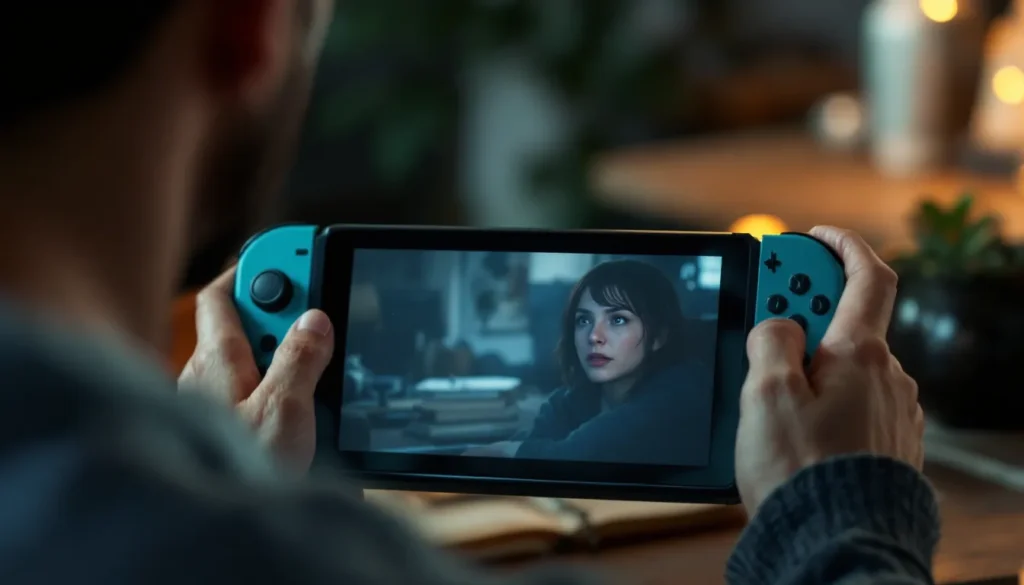
Handheld mode is where Life Is Strange shines on Switch. Holding the console in your hands while dialogue unfolds and you’re faced with time-pressured choices creates an intimate experience. The Joy-Con controls are responsive for menu navigation and selecting options. Reading subtitles in handheld mode works fine thanks to the screen size, you won’t struggle to follow conversations.
Docked mode on a larger TV enhances environmental storytelling and cinematics. Character expressions come through more clearly. But, handheld mode feels more natural for these games. The smaller screen makes the experience feel personal, which matches the introspective nature of Life Is Strange narratives. Many players prefer handheld exclusively: others switch between both depending on setting.
Battery life: expect 3–4 hours of continuous play in handheld mode, depending on Switch model (OLED lasts slightly longer). These games are perfect for portable sessions without demanding the marathon sessions that drain batteries faster.
Gameplay Mechanics And What To Expect
Life Is Strange games aren’t traditional action-adventure titles. Understanding the core mechanics helps set expectations and shows why the series resonates with story-focused players.
Choice-Driven Narrative System
The heart of Life Is Strange is the illusion of choice combined with genuine consequence. At key moments, you’ll face dialogue options or action choices. The game doesn’t force morality, there’s rarely a “right” answer. You’re choosing based on character intuition, personal values, or what feels authentic to the moment.
What makes this powerful is that the game remembers your choices. A decision you make in Episode 1 might ripple through the entire story, changing how characters perceive you, what information you access, or even which endings become possible. The game tracks these decisions behind the scenes and occasionally shows you a recap of your most critical choices.
This doesn’t mean the game branches into infinite storylines. Most Life Is Strange games have a predetermined endpoint, but the path to that ending varies based on your choices. It’s a carefully balanced system where your decisions feel meaningful without overwhelming the narrative scope.
Time-Manipulation Powers And Puzzle Solving
Unlike True Colors’ emotion-reading or Double Exposure’s timeline-jumping, the original Life Is Strange and Before The Storm featured Max’s time-rewind ability. She can literally rewind moments to try different dialogue options, gather information she missed, or solve puzzles by experimenting with sequences.
Time-based powers create a unique puzzle-solving dynamic. You’re not looking for hidden keys or solving abstract logic puzzles. Instead, you’re reordering events, testing cause-and-effect chains, and discovering what information or actions unlock new paths. It’s intellectually satisfying without requiring map knowledge or pixel-hunting.
Double Exposure’s two-timeline mechanic operates differently but with similar puzzle DNA. You observe clues in one reality, use that knowledge in another, and piece together mysteries across parallel worlds. The mechanic is fresh while honoring the series’ tradition of time-related gameplay.
Essential Tips And Strategies For New Players
Coming into Life Is Strange for the first time can feel overwhelming. These tips help you get the most from your playthrough.
Making Meaningful Choices
Don’t restart episodes because you dislike a choice. That’s the entire point of Life Is Strange, live with your decisions and see where they lead. The game is designed so that no choice is truly “wrong.” Some decisions will haunt you, and that emotional weight is intentional.
Take time with dialogue options. These aren’t action-game quick-time events where delay means failure. Pause, consider what your character would say, then choose. The game respects thoughtful decisions, and you’ll feel more connected to your character’s arc when you actively shape it.
Don’t look for secrets or hidden “best” dialogue. Life Is Strange values your personal judgment. If you want to be harsh to a character because it feels realistic to the situation, do it. If you want to show kindness when it would be easier to walk away, that’s valid too.
Exploration And Hidden Collectibles
Life Is Strange rewards exploration without demanding it. Each environment contains small collectibles, photos, journal entries, hidden dialogue, that add flavor to the world but aren’t required for story completion.
When you enter a new location, spend 5–10 minutes looking around. Examine objects, read signs, interact with anything that catches your eye. These moments aren’t wasted time: they’re story enrichment. A seemingly throwaway object might hint at a character’s history or foreshadow future events.
If you miss collectibles, don’t worry. The game is designed so you can finish a strong playthrough without finding everything. Completionists might miss a few optional experiences, but the core narrative remains powerful regardless.
Accessibility Features On Switch
Life Is Strange includes several accessibility options that make the game playable for a wider audience. In-game settings allow you to adjust text size, colorblind modes for environmental clues, and the ability to toggle time-pressured choices on or off.
If you struggle with fast-paced dialogue decisions, turning off time pressure means you can read and decide at your own pace. This doesn’t diminish the emotional impact, you still make meaningful choices, just without artificial urgency. For players with color blindness, the games provide alternatives to color-coded information, ensuring nothing crucial goes missed.
Is Life Is Strange Worth Playing On Nintendo Switch
If you value narrative experiences, character-driven stories, and meaningful player agency, Life Is Strange on Switch absolutely deserves your time. The series has earned its reputation through genuinely emotional storytelling and respect for player choice.
On Switch specifically, the games benefit from portability and the console’s intimate handheld experience. Streaming platforms and media outlets frequently highlight Life Is Strange as one of gaming’s finest narrative achievements, and reviews on major gaming outlets like IGN consistently praise the series’ emotional depth and storytelling craft.
The main consideration is genre fit. If you primarily play action, competitive, or puzzle-focused games, Life Is Strange won’t appeal to you. But if you’ve enjoyed narrative-driven games like Alien: Isolation on Nintendo Switch, story-heavy indie titles, or character-focused RPGs, Life Is Strange aligns perfectly with your tastes.
Playtime varies by entry: True Colors takes 8–10 hours, Before The Storm runs 4–5 hours (with bonus content), and Double Exposure spans 5–6 hours. For players seeking deep narratives without hundred-hour commitments, these games are ideal. You can finish a complete playthrough in 1–2 weeks of casual play, giving you closure and a finished story arc.
Worth noting: playing through all three entries gives you different perspectives on the same universe, time periods, and character relationships. If you complete one game and want more, the series rewards replay. Choosing different dialogue options in a second playthrough genuinely changes your experience.
Where To Buy And Pricing Information
Life Is Strange games are available digitally on the Nintendo eShop and physically at major retailers. Here’s the breakdown:
Life Is Strange: True Colors currently retails for $39.99 on the eShop. Physical copies are available but harder to find since the eShop is Nintendo’s primary distribution channel. Occasional sales drop the price to $25–$30 during Switch seasonal promotions.
Life Is Strange: Before The Storm is priced at $19.99 on the eShop, making it the most affordable entry point. Physical copies exist but are increasingly rare as the game released in 2017. If you hunt for used physical copies, expect to pay $15–$25 depending on condition.
Life Is Strange: Double Exposure launched at $39.99 and maintains that price. Being the newest release, it’s readily available digitally and occasionally appears in physical retail. Sales are less common on newer titles, but they do happen, watch for Nintendo’s periodic eShop discounts.
For players exploring Nintendo Switch games broadly, check Nintendo Switch Code Secrets for exclusive discounts or eShop cards that occasionally go on sale at retailers. Some digital storefronts like Humble Bundle offer discounts on Nintendo game codes.
Price comparison: PC versions on Steam are similarly priced, and PlayStation versions cost the same. Switch’s advantage isn’t cheaper pricing, it’s portability. Pay the same price as other platforms, gain the ability to play handheld.
If you’re unsure which game to buy first, True Colors is the safest entry point at $39.99 since it stands alone narratively and represents the series at its most refined. Before The Storm offers better value at $19.99 but assumes you care about original game context. Double Exposure is perfect if you want the newest, most mechanically innovative entry.
Conclusion
Life Is Strange on Nintendo Switch brings one of gaming’s finest narrative franchises to a platform built for portable, intimate experiences. Whether you’re discovering the series for the first time with True Colors, revisiting Chloe’s past through Before The Storm, or experiencing Max’s new adventure in Double Exposure, each game delivers the choice-driven storytelling and emotional impact the series is known for.
The Switch versions perform admirably, running smoothly at 30 fps with minimal load times and no technical hiccups. The handheld experience feels especially natural for games designed around player choice and introspection. You’re getting the same narrative quality as other platforms, with the added flexibility to play wherever and whenever you want.
If story-driven games resonate with you, and you’re looking for experiences that respect player agency and deliver genuine emotional weight, Life Is Strange won’t disappoint. The games are thoughtfully paced, accessible, and designed to linger with you long after the final credits roll. On Nintendo Switch, they’re absolutely worth your time and money.