
Table of Contents
ToggleThe Nintendo Switch handheld has evolved into one of gaming’s most versatile platforms since its 2017 debut. Whether you’re a casual player dipping into indie games during your commute or a competitive gamer grinding ranked matches, the Switch delivers portability without major compromises. In 2026, the ecosystem is mature with an enormous library, multiple hardware revisions, and proven online infrastructure. This guide covers what you need to know about the Nintendo Switch handheld, from the specs that matter to which model fits your playstyle, the games worth your time, and the accessories that genuinely improve your experience.
Key Takeaways
- The Nintendo Switch handheld delivers nearly 10 years of proven gaming with a library exceeding 4,000 titles ranging from Nintendo’s iconic franchises like Mario and Zelda to demanding ports like Doom.
- Three hardware models serve different playstyles: the original Switch offers flexibility with docking, the Lite provides pure portable affordability, and the OLED model features superior battery life (4.5-9 hours) and vibrant display technology.
- Battery optimization and practical accessories like microSD cards (128GB+), protective cases, and Bluetooth headphones significantly enhance your Nintendo Switch handheld experience without major expense.
- Frame rate performance has stabilized at 30fps for most games and 60fps for competitive titles like Splatoon 3 and Mario Kart 8, making the Switch competitive for local multiplayer and online gaming.
- Essential first-party games such as The Legend of Zelda: Tears of the Kingdom, Pokémon Scarlet/Violet, and Super Smash Bros. Ultimate justify ownership alone, while the indie ecosystem continues to thrive on the platform.
What Is The Nintendo Switch Handheld?
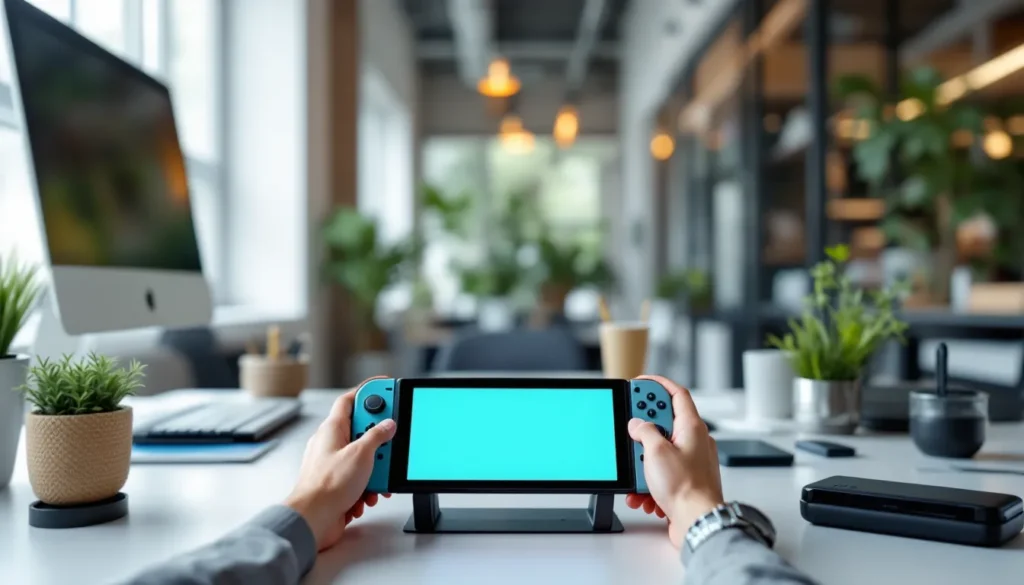
The Nintendo Switch handheld is Nintendo’s hybrid gaming device that functions as both a portable system and a stationary home console. You can dock it, detach the Joy-Con controllers to play tabletop-style, or hold it handheld, that versatility is the whole point. It runs on an NVIDIA Tegra processor and supports a library exceeding 4,000 games ranging from AAA ports to indie breakouts.
The system’s longevity speaks for itself. Unlike typical console cycles that last five to seven years, the Switch has sustained strong sales and developer support for nearly a decade. Nintendo‘s first-party lineup, Mario, Zelda, Pokémon, Splatoon, keeps players invested, while third-party publishers have brought everything from Doom to Witcher 3 to the platform in some form.
When people talk about the Switch handheld specifically, they mean using it in portable mode: playing on the built-in 6.2-inch screen without the dock. This is where the Switch’s design philosophy really shines, you’re getting something surprisingly close to home console experiences in your pocket, even if the graphics take a hit compared to PS5 or Xbox Series X.
Key Hardware Specifications and Capabilities
Display Quality and Screen Technology
The Nintendo Switch handheld features a 6.2-inch IPS LCD screen with 1280 × 720 resolution. That’s not a typo, the resolution hasn’t changed since launch. The IPS panel gives solid viewing angles and decent color reproduction, though blacks aren’t as deep as OLED alternatives.
Brightness is acceptable for indoor play but can struggle in direct sunlight. If you spend a lot of time gaming outdoors, you’ll notice glare. The original screen gets the job done, but it’s not where Nintendo’s latest hardware innovation happened. That’s why the OLED model (covered later) became so popular with players who valued better colors and contrast.
Processing Power and Performance
The Switch runs an NVIDIA Tegra X1 processor, a mobile chip from 2015. Don’t let that date fool you: it’s competent for what it does. The GPU delivers 256 CUDA cores, which isn’t powerhouse territory, but developers have gotten impressive results through optimization.
Frame rates vary wildly across the library. Most first-party titles target 30fps or 60fps depending on the game. Handheld mode sometimes sees frame drops compared to docked play because the system throttles performance to manage temperatures and battery drain. Competitive games like VALORANT or Fortnite run at lower resolutions to maintain stable 60fps, while story-driven games like Zelda prioritize visual quality and accept variable frame pacing.
Ram sits at 4GB, and internal storage is limited, the base model includes 32GB, though a substantial portion is reserved for system software. Real usable space is closer to 26GB, which is why most players grab a microSD card.
Battery Life and Charging Options
The original Switch model (2017 hardware revision) gets around 4.5 to 6.5 hours of real-world battery life depending on the game. Playing something graphically simple like Stardew Valley? You might squeeze six hours. Playing Doom? More like four.
Charging happens via USB-C, and the system supports 15V/2.6A official dock charging plus USB-C power adapters. A full charge takes roughly three hours. The OLED model improved battery capacity significantly, offering 4.5 to 9 hours depending on the title, a meaningful upgrade for handheld grinders.
Many players supplement with portable battery banks rated for USB-C Power Delivery to extend sessions. That’s standard practice for anyone doing extended handheld gaming away from outlets.
Nintendo Switch Models: Comparing Your Options
Original Nintendo Switch
The 2017 original comes with both docked and handheld capability. You get the full console experience with the flexibility to play on your TV or on the go. The detachable Joy-Con controllers enable tabletop mode for local multiplayer games.
Battery improvements arrived in August 2019 when Nintendo released a revised model with better power management, extending handheld play to roughly 5.5 to 6.5 hours. If you’re buying used, checking the manufacturing date matters, early 2017 models drain noticeably faster than the 2019 revision.
The original is best if you value dock flexibility and don’t mind slightly dated screen tech. It’s also usually the cheapest option on the secondhand market.
Nintendo Switch Lite
The Switch Lite (2019) dropped the docking functionality and the detachable Joy-Con to create a pure handheld device. It’s smaller, lighter (only 5.1 ounces), and more affordable than the original. The 5.5-inch screen is a step down from the 6.2-inch original, making docked play impossible.
Why does this matter? Games like Ring Fit Adventure or games requiring Joy-Con detachment won’t work properly. You’d need to buy a separate controller setup, which defeats the cost savings. The Lite is fantastic if your gaming happens exclusively in handheld mode and you don’t plan to use a TV.
Battery life is competitive with the original at 5.5 to 6.5 hours. It’s the entry-level option and appeals to players wanting pure portability without compromise.
Nintendo Switch OLED
The Switch OLED (October 2021) is the current flagship model. The key upgrade is the 7-inch OLED screen, which delivers vibrant colors, true blacks, and dramatically better contrast than the original’s LCD panel. If you’re using the Switch handheld-primary, this is the version that makes the most visible difference in daily play.
Battery life is the standout improvement: 4.5 to 9 hours depending on the game. Playing something like Pokémon or Animal Crossing? You’re looking at 8+ hours easily. The internal 64GB storage is doubled from the original, though you’ll still want a microSD card for any serious library.
The OLED model costs more, but the battery and screen justify it for players who game handheld frequently. It’s the recommendation for anyone expecting to play primarily away from a dock.
Essential Games and Must-Play Titles
Action and Adventure Games
The Legend of Zelda: Breath of the Wild is mandatory. It redefined open-world design when released in 2017, and it holds up beautifully in handheld mode. The frame pacing is variable (runs 30fps with dips), but the exploration and puzzle design are timeless.
The Legend of Zelda: Tears of the Kingdom (2023) is its sequel and arguably superior. Handheld performance is identical to Breath of the Wild, but the building mechanics and dungeon design represent genuine innovation. If you own the Switch, you’ll play this.
For pure action, Doom and Doom Eternal are impressive ports. Resolution drops to 720p handheld (lower when docked), but the gameplay feels intact. These prove the Switch can handle technically demanding games through smart optimization.
Metroid Dread (2021) is a 2D side-scroller that feels current and challenging. It runs locked 60fps and showcases what the hardware can do when fully optimized. Metroid Prime Remastered (2023) is a surprise remake of the 2002 GameCube original, it’s excellent and benefits from handheld portability.
RPGs and Story-Driven Experiences
Pokémon Sword/Shield and the newer Scarlet/Violet (2022-2023) are cultural phenomena. Performance in Scarlet/Violet dips occasionally in towns, but the open-world Pokémon experience is addictive. Competitive players use these for ranked battles online.
Fire Emblem: Three Houses is a tactical RPG with meaningful story branches and character relationships. It’s dense, runs 30fps, but the 60+ hour campaign rewards investment. Advance Wars 1+2: Re-Boot Camp (2023) modernized the classic tactical series similarly.
Xenoblade Chronicles series (original, 2, and 3) offers JRPG depth with action combat. These are 80+ hour experiences that showcase Nintendo’s commitment to serving different genres. Handheld performance isn’t flawless, but the games scale well.
Final Fantasy VII Remake’s “Intergrade” episode exists on Switch, though it’s a scaled version. Octopath Traveler and Octopath Traveler 2 deliver retro-inspired JRPGs with modern design. Both run locked 60fps and are stellar for handheld grinding.
Multiplayer and Party Games
Mario Kart 8 Deluxe (2017 port of the Wii U version) remains the platform’s most-played local multiplayer game. Split-screen runs 30fps, which is lower than docked, but it’s buttery smooth and competitively viable. Online multiplayer supports up to 12 players.
Super Smash Bros. Ultimate (2018) is the fighter’s current standard. Over 80 characters, extensive single-player content, and robust online with rollback netcode. The game maintains competitive credibility, tournaments still use it for serious competition.
Splatoon 3 (2022) is Nintendo’s ink-based team shooter. It’s 4v4, runs 60fps in handheld, and has a strong ranked competitive scene. The game benefits from gyro aiming (flicking the Joy-Con to aim), which feels natural once you calibrate.
Mario Party Superstars (2021) is the digital classic collection for couch co-op chaos. Nintendo Switch Sports offers Wii-like motion controls for tennis, bowling, and golf, good for casual groups but not as polished as the originals.
Among Us became a cultural phenomenon on Switch even though being a port from other platforms. It’s free-to-play with optional cosmetics. Fortnite runs at 60fps in battle royale, resolution is dynamic (often 720p handheld), but it’s playable for casual and competitive players.
Handheld Gaming Performance in 2026
Handheld performance on the Switch in 2026 is stable but reaching its limits. Developers have spent nine years optimizing for the hardware, and it shows, first-party titles look impressive given the constraints. But ambitious multiplatform releases increasingly skip the Switch or arrive heavily compromised.
Framerate expectations have normalized. 30fps is acceptable for most genres, 60fps is common for action and competitive games, and anything higher is rare. Game design often compensates: Nintendo’s art direction masks raw horsepower limitations better than most studios.
Handheld mode specifically sees frame drops in demanding scenarios. Playing in handheld versus docked mode can mean 15-20fps differences during intensive scenes. This is thermal throttling, the system clocks down to manage heat and battery drain without active cooling. It’s a trade-off for portability that players accept.
Resolution scales dynamically in many modern games. Handheld mode often runs native 1280 × 720, while some titles drop to 600p or lower to maintain target framerates. The screen’s pixel density masks this reasonably well, you won’t see individual pixels at normal viewing distance.
Online performance is solid. The Switch uses peer-to-peer networking for most games rather than dedicated servers, which means connection quality depends on players’ ISPs. Games like Splatoon 3 and Mario Kart 8 Deluxe use this effectively, though you’ll occasionally encounter lag.
Looking ahead, the Switch is approaching end-of-life. Hardware rumors about a successor have circulated since 2023, but nothing official. Current games will run fine, but expecting cutting-edge ports of 2026 releases is unrealistic. The library’s depth means you’ll never run out of quality games to play, but new AAA multiplatform releases increasingly target newer hardware first.
Accessories and Enhancements for Better Gameplay
Controllers and Pro Controller Options
The Nintendo Switch Pro Controller ($70) is the gold standard for handheld play when you’re not using the device itself. The D-pad is properly directional (unlike the original Joy-Con), the grip is ergonomic for extended sessions, and the buttons feel premium. It supports motion controls and works wirelessly via Bluetooth.
Drift was a widespread issue with original Joy-Con, though Nintendo has improved later batches. The Pro Controller uses different components and isn’t immune but drifts less frequently. Replacement sticks from third parties exist if drift occurs.
Third-party controllers like PowerA’s Enhanced Wireless Controller are cheaper ($50-60) but lack motion controls and have shorter battery life. They’re fine for turn-based games or local multiplayer but inferior for games requiring gyro aiming like Splatoon.
The Joy-Con controllers themselves remain the standard for handheld+tabletop play. Extra sets ($80 per pair) let groups play local multiplayer without additional hardware. The grip attachment ($15) is worth buying if you’re not using a Pro Controller, it makes handheld sessions far more comfortable.
For handheld-exclusive players, grips like the Hori Split Pad Pro ($50) are minimalist alternatives to the Pro Controller. No drift worries since they don’t have analog sticks: they offer back buttons for programmable inputs. Some prefer them for comfort, others find them limiting.
Protective Cases and Screen Protectors
A microSD card (128GB to 512GB) is non-negotiable. The internal 32GB (or 64GB on OLED) fills quickly once you download multiple games. A 256GB card runs $25-35 and handles your entire library. Games load and play identically on microSD, there’s no performance penalty.
A protective case prevents scratches and damage from drops. The dock can scratch the original Switch’s screen if you’re careless inserting/removing it. Official Nintendo cases are pricey ($20-30): third-party options from Spigen or Skull & Co. cost less and offer equal protection.
A tempered glass screen protector ($8-15) prevents scratches and resists fingerprints better than plastic. Apply it carefully once and forget about it. They’re nearly invisible and don’t noticeably affect screen quality.
A carrying case for travel is separate from a protective shell. Hard-shell cases ($25-50) with foam inserts fit the console, controllers, dock, and cables. Essential if you’re bringing your Switch to events or traveling.
Audio and Display Upgrades
The Switch’s built-in speaker is serviceable indoors but weak for immersive gaming. Portable Bluetooth speakers ($30-100) dramatically improve audio. The Anker Soundcore Portable is popular, compact, 10-hour battery, and decent bass. Most pair via Bluetooth in under 10 seconds.
Wireless Bluetooth headphones are the most common audio upgrade. Any standard Bluetooth headset works: gaming-specific options like HyperX Cloud Stinger exist but aren’t necessary. The Switch’s Bluetooth implementation is stable for audio (not ultra-low latency like gaming headsets on other platforms).
USB-C hubs enable simultaneous charging while connecting peripherals. If you want to charge and use wired headphones simultaneously, a hub ($20-40) is required since the Switch has one USB-C port.
A portable battery bank with USB-C Power Delivery is the most practical enhancement for handheld longevity. A 20,000mAh bank ($30-50) can charge the Switch 2-3 times. Models like the Anker 737 support fast charging and work with other devices too.
There’s no feasible way to upgrade the screen itself without replacing the entire console. DisplayPort docks exist for streaming, but they don’t enhance handheld play.
Tips for Maximizing Your Switch Handheld Experience
Optimizing Battery Performance
Reduce screen brightness indoors. The Switch defaults to full brightness, which drains battery unnecessarily. Sliding it to 60-70% is often imperceptible indoors but extends play time by 30+ minutes. In direct sunlight, brightness is necessary, but toggle it down when possible.
Disable WiFi and Bluetooth when playing offline single-player games. The Switch continues scanning for networks and controllers even if you’re not using them. Turning off wireless features in Settings > Airplane Mode adds another 15-20 minutes of play.
Use Airplane Mode strategically. If you’re playing a game that doesn’t require online, activate Airplane Mode. Yes, you lose online features temporarily, but battery drain decreases noticeably.
Close background apps. The Switch allows multiple games to run suspended in the background. Press the Home button, highlight unused games, and press X to force-close them. Each running app drains a small amount of battery.
Avoid intense graphics during low-battery situations. If you’re running at 10-20% battery, playing Doom Eternal will shut down faster than playing Pokémon. Prioritize demanding games when freshly charged.
Storage Management and Game Downloads
A 128GB or 256GB microSD card is essential. Games range from 200MB (indie titles) to 16GB+ (Doom Eternal, The Witcher 3). You’ll want room for 20-30 games minimum without constant deletion.
Delete unused games to reclaim space. Reinstalling later redownloads from your account, so you’re not losing access. Uninstall older games you’ve completed to make room for new purchases.
Enable auto-updates in Settings > System > Auto-Update Software. Games patch regularly, and manual updates are tedious. Let them update overnight while the Switch is docked.
Download games on WiFi, not mobile data. Large game downloads consume 5-20GB, which would chew through data caps. Connect to WiFi when downloading, then play anywhere.
Manage your account’s licenses carefully. Games are tied to your user account and the console. If you share your Switch with family, understand that anyone on the console can play your library, but only the primary account owner can play games on other consoles using that account.
Online Features and Multiplayer Setup
Nintendo Switch Online ($20/year basic, $50/year expansion pack) is required for online multiplayer. The basic tier includes NES and SNES games: the expansion pack adds N64, Game Boy, and Genesis titles. Evaluate whether you’ll use the classic games before upgrading.
Configure your internet connection properly. Go to Settings > Internet Settings and select your WiFi. If you have 5GHz and 2.4GHz networks, either will work, but 5GHz offers slightly better stability. If your router is far away, move closer or use a 2.4GHz band for better range.
Enable NAT filtering in router settings if possible. Strict NAT doesn’t prevent online play but can cause lag in peer-to-peer games. If you’re experiencing matchmaking issues, ask your ISP or check your router’s manual for UPnP (Universal Plug and Play) settings.
Connect a wired Ethernet adapter ($15-30) to the dock for stationary gaming. USB-C Ethernet adapters reduce latency compared to WiFi, especially important for competitive titles like Splatoon or Smash Bros.
Add friends via their friend codes or account names. Local multiplayer games can work without internet, but online features require accounts. Manage privacy settings in your account if you’re a younger player or playing with kids.
Test your connection speed in Settings > Internet Settings > Test Connection. You need 5+ Mbps download for smooth online play. Under 3 Mbps often causes noticeable lag.
Conclusion
The Nintendo Switch handheld in 2026 remains a platform worth owning. Its library is unmatched in breadth, the hardware is proven reliable over nine years, and the versatility of playing anywhere defines modern portable gaming. Whether you choose the OLED model for its superior screen and battery, the original Switch for flexibility with docking, or the Lite for pure handheld affordability, you’re getting access to thousands of quality games.
Performance expectations matter. The Switch won’t match current-gen home consoles in raw power, and late-generation ports sometimes feel compromised. But Nintendo’s first-party games remain exceptional, and the indie ecosystem thrives on the platform. The community is active, online infrastructure is solid, and there’s a thriving competitive scene for titles like Splatoon 3 and Super Smash Bros. Ultimate.
Setup your handheld correctly: grab a microSD card, invest in a decent case, and calibrate your preferences in Settings. Optimize battery life through brightness management and wireless toggles. Your Switch handheld experience scales with small hardware additions and intentional configuration.
The question isn’t whether the Switch handheld is worth buying in 2026, it’s which model fits your lifestyle. Casual gamers and commuters find unbeatable value. Competitive players get legitimate platform-leading experiences in Splatoon, Smash, and Mario Kart. Story-driven gamers have more quality RPGs and adventures than they can finish in a year. The handheld’s enduring success proves that Nintendo’s hybrid design philosophy solved a real problem in gaming: portability without sacrifice.