
Table of Contents
ToggleNintendo Switch VR gaming is no longer a niche curiosity, it’s become a genuine part of the Switch ecosystem. With the release of Nintendo’s VR hardware and a growing library of titles, there’s never been a better time to jump into immersive gaming on Nintendo’s hybrid console. Whether you’re a casual player looking for a fun way to experience games or someone curious about what VR can do on the Switch platform, this guide covers everything you need to know about Nintendo Switch VR games, the hardware you’ll need, the best titles worth your time, and tips to make your experience smooth and enjoyable. We’ll break down the essentials, highlight standout games, and show you how to get the most out of your VR setup without the premium price tag of traditional VR systems.
Key Takeaways
- Nintendo Switch VR games provide accessible, immersive gaming experiences without the premium price tag of standalone VR systems like Meta Quest or PlayStation VR2.
- The Nintendo Switch VR headset costs only $35–$45 USD and works with your existing Switch and Joy-Con controllers, making it one of the most affordable VR entry points available.
- Standout Nintendo Switch VR games include Metroid Prime, The Legend of Zelda: Breath of the Wild VR Mode, Portal VR, and I Expect You to Die—each offering unique gameplay that justifies the investment.
- Proper setup is essential for optimal Nintendo Switch VR enjoyment: calibrate your controllers, define a safe 6×6-foot play area, use good lighting, and consider headphones for spatial audio immersion.
- Take 20–30 minute breaks during VR sessions and start with slower-paced games to minimize motion sickness and ensure long-term comfort and enjoyment.
- The Nintendo Switch VR library continues expanding with new first-party and third-party titles, positioning VR as a genuine platform within the Switch ecosystem rather than a temporary gimmick.
What Is Nintendo Switch VR Gaming?
Nintendo Switch VR gaming is the integration of virtual reality experiences into the Nintendo Switch platform. Unlike dedicated VR systems like PlayStation VR2 or Meta Quest, Nintendo’s approach is lightweight and accessible, designed for the player who wants immersion without the investment of a full VR headset setup.
The concept isn’t entirely new. Nintendo famously experimented with VR via the Virtual Boy in the mid-90s, which was… let’s just say it didn’t age well. But modern Nintendo Switch VR represents a completely different animal. The hardware works with the Switch’s existing Joy-Con controllers and handheld screen, creating a more affordable entry point into VR gaming.
What makes Nintendo Switch VR distinct is its focus on fun, accessible gameplay rather than hardcore simulation or photorealism. These games prioritize engaging mechanics and creative use of the VR space over cutting-edge graphics. You’re getting genuine VR experiences, head tracking, spatial audio, 3D environments, but packaged in a way that feels natural to the Switch’s design philosophy.
The VR library includes everything from puzzle games that make you think in three dimensions to action titles that demand quick reflexes. Many games offer both VR and traditional handheld modes, letting you switch between experiences depending on your mood. This flexibility is a huge part of what makes Nintendo Switch VR appealing to casual and hardcore gamers alike.
Nintendo Switch VR Hardware Requirements
Getting into Nintendo Switch VR doesn’t require a massive investment in hardware, but you do need to understand what’s required to get started. Let’s break down what you actually need to buy and use.
Official Nintendo Switch VR Headsets
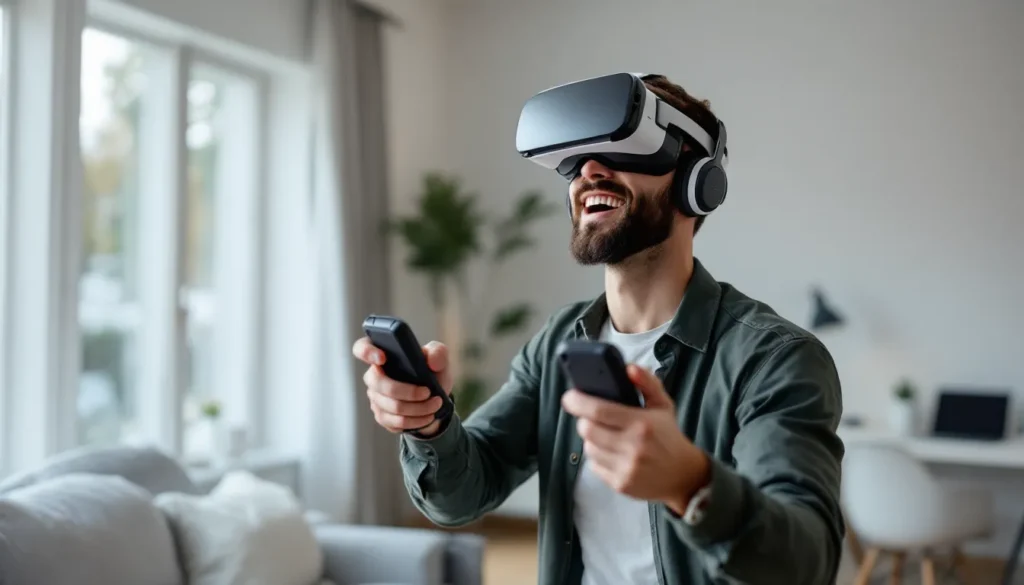
The primary piece of hardware is the Nintendo Switch VR Headset, the official accessory released by Nintendo. This isn’t a standalone device like a Meta Quest, it’s a head-mounted viewer that uses your Switch screen as the display. You slot your Nintendo Switch into the headset, and the Joy-Con controllers handle motion tracking and input.
The headset itself is relatively simple: a plastic frame with lenses, head straps, and a compartment for the Switch. It’s lightweight (crucial for extended play sessions), and the design accommodates both docked and handheld Switch modes. The headset works with any Nintendo Switch model, original, OLED, or Lite, though the larger screens on the OLED and standard versions provide a more immersive visual experience.
Key specs worth knowing:
- Resolution: Uses your Switch’s display (1080p on OLED, 720p on standard)
- Field of View: Approximately 100 degrees
- Tracking: 6-DOF head tracking via the Joy-Con gyroscopes
- Audio: Supports stereo sound: many players use headphones for better immersion
- Price: Around $35-45 USD, making it one of the most affordable VR entry points
The headset doesn’t require a power source beyond what the Switch already uses, and there’s no need for external sensors or a PC connection. It’s genuinely plug-and-play.
Compatible Accessories and Controllers
While the Joy-Con controllers that come with your Switch work for VR, Nintendo released Joy-Con Grip accessories specifically designed for VR play. These grips improve ergonomics during extended VR sessions and make it easier to use both controllers for games that demand precise hand tracking.
The Nintendo Switch Zapper accessory (the same one used for games like Duck Hunt) also works with certain VR titles, offering a more gun-like grip for first-person experiences. This is particularly useful if you’re diving into action-oriented VR games.
Additional accessories to consider:
- Headphones or earbuds – For spatial audio immersion. The built-in Switch speakers work, but dedicated audio is a significant upgrade.
- Safety mat or marked play area – Some VR games demand you move around, so defining your play space prevents tripping hazards.
- Extra Joy-Con sets – If you’re playing multiplayer VR titles or want backups during long sessions.
The beauty of Nintendo Switch VR is that you don’t need to buy a ton of extra hardware. Your existing Switch and Joy-Cons are 90% of what you need. The VR headset itself is the main investment, and it’s remarkably affordable compared to dedicated VR systems.
Top Nintendo Switch VR Games Worth Playing
The Nintendo Switch VR library might be smaller than PlayStation VR or Meta Quest, but quality wins over quantity. Here are the games that have earned their place in the ecosystem.
Adventure and Action Titles
The Legend of Zelda: Breath of the Wild (VR Mode) remains one of the most remarkable VR experiences on Switch. While the original 2D experience is already a masterpiece, playing Hyrule in VR transforms the sense of scale and exploration. You’re standing in Link’s boots, looking up at Hyrule Castle in the distance, and the immersion is genuinely breathtaking. Note that VR mode is available as a free update if you own the game.
Metroid Prime received a full VR conversion, and it’s a different beast entirely. First-person perspective in VR elevates the classic exploration-combat formula. You’re scanning environments, solving puzzles, and fighting Metroids from Samus’s viewpoint. This is how Metroid was meant to be experienced on Switch.
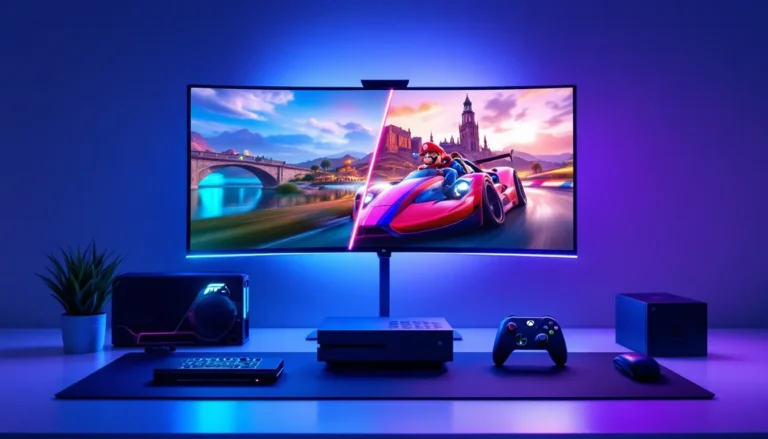
Mario Kart VR (via Mario Kart Live) brings racing into your living room with augmented reality mixed with VR elements, though it’s more AR-focused than pure VR. Still, the spectacle of seeing Mario racing around your space is worth experiencing.
Star Wars: Tales from the Galaxy’s Edge drops you into the Star Wars universe in first-person VR. You’re a droid mechanic caught up in adventure, and the lightsaber combat feels visceral. This is one of the few titles where the action feels truly immersive.
Puzzling Places is a underrated gem that lets you build 3D block puzzles in VR. It sounds simple, but the satisfaction of manipulating objects in three-dimensional space is oddly addictive.
Puzzle and Strategy Games
Portal VR adapted Portal’s puzzle mechanics to VR brilliantly. First-person portal manipulation takes spatial reasoning to another level. If you loved the original Portal games, experiencing them in VR adds a layer of complexity and satisfaction.
I Expect You to Die series (Parts 1 and 2) are spy-themed escape room experiences. You’re solving intricate puzzles to escape increasingly absurd situations. The humor and puzzle design shine in VR, where interacting with objects feels tangible.
Creed: Rise to Glory bridges action and puzzle gameplay, putting you in a boxing ring where physics and positioning matter. Dodge, weave, and counter enemies in first-person combat that rewards timing and strategy.
Dance Dash VR gamifies rhythm and movement in VR space. It’s less about complex puzzles and more about spatial awareness and timing, making it accessible to players of all skill levels.
Casual and Party Games
Nintendo Switch Sports has VR elements that make it feel fresh compared to traditional motion control sports games. The physicality of golf, tennis, or bowling feels more grounded when you’re immersed in the environment.
Surgeon Simulator 2 in VR is hilariously chaotic. Surgery isn’t supposed to be easy, and the game nails the absurdist humor through VR’s inherent awkwardness. It’s party game material, watch friends struggle to perform basic operations in VR and laugh accordingly.
Synth Riders is a rhythm game where you reach and grab notes in 3D space. If you like Beat Saber but want something with different vibes and music selection, Synth Riders scratches that itch on Switch.
First-person Kirby experiences via Kirby’s Dream Land VR concepts showcase Nintendo’s experimental approach. Don’t expect a full game, but the novelty of seeing Popstar from Kirby’s perspective is charming.
Worth noting: The VR library evolves with every Nintendo Direct and eShop update. Check the Nintendo Switch Archives regularly for new releases and updates to existing titles. Also, platforms like IGN frequently cover new VR game announcements and reviews, so subscribing to gaming news keeps you informed about fresh VR content.
How to Optimize Your Nintendo Switch VR Experience
Having the hardware and games is only half the battle. To truly enjoy Nintendo Switch VR, you need to optimize your setup and environment. Here’s how to level up your experience.
Setting Up Your VR Space
First priority: Define your play area and clear it. VR demands physical space, you’ll be moving your arms, sometimes your entire body. A cluttered living room is a twisted ankle waiting to happen.
Measure out roughly a 6-by-6-foot area minimum. Mark it with tape, furniture placement, or just know where your boundaries are. This prevents accidentally knocking over a lamp or kicking a pet during an intense VR session. Some players use yoga mats or marked spaces to make it obvious where they can move safely.
Lighting matters more than you think. The Joy-Con accelerometers and gyroscopes perform better in well-lit environments. Poor lighting can cause drift or tracking jitter, making games feel sluggish. Natural light or bright room lighting works best.
Comfort setup shouldn’t be overlooked. The VR headset should sit snugly on your head without pressing too hard. Adjust the straps until it feels stable but not uncomfortable. A face cushion or forehead pad (aftermarket options exist on Amazon) can improve comfort during longer sessions.
Seating or standing? Most VR games work in both modes, but some are designed standing. If you’re planning longer sessions, consider a padded chair or stool within arm’s reach. You can sit and play most titles comfortably, though standing adds immersion for action games.
Performance and Graphics Tips
Nintendo Switch VR games don’t push the console to its limits, they’re optimized for the handheld hardware, but small tweaks improve performance.
Resolution and refresh rate: While you can’t manually adjust these, ensure your Switch is updated to the latest firmware. Game updates often include performance patches. Check your game’s settings menu: some titles offer “performance” vs. “quality” modes. Choose performance if you notice frame rate dips.
Manage battery life strategically. Playing VR drains battery faster than handheld mode due to constant processing. Before longer sessions, dock your Switch to charge, then play. If you’re playing portably, bring the charger and keep the console plugged in. Many VR headsets have a cable routing system that accommodates charging cables.
Reduce motion sickness potential (crucial for new VR players):
- Start with slower-paced games. Don’t jump straight into fast-action titles.
- Take breaks every 20-30 minutes. VR is intense, and your eyes and balance system need recovery time.
- Ensure your head tracking is calibrated correctly. Most VR games have a calibration option in settings.
- Play in well-ventilated spaces. Overheating (headset or player) can trigger discomfort.
Joy-Con calibration is essential. Go to Switch Settings → Controllers and Sensors → Calibrate Control Sticks, and run the calibration for any Joy-Cons you’re using for VR. Proper calibration eliminates unwanted drift and ensures responsive gameplay.
Audio optimization can’t be overstated. Switch’s speakers work, but investing in a pair of affordable gaming headphones transforms immersion. Spatial audio cues (footsteps, directional sounds) become crisp and informative. Consider wireless earbuds for tangle-free play.
Game-specific tweaks: Many VR titles let you adjust field of view, controller sensitivity, or comfort settings. Spend a minute in the options menu before starting. A few seconds adjusting sensitivity can be the difference between an enjoyable session and feeling awkward in the virtual space.
For detailed guides on individual games and optimization strategies, resources like GamesRadar+ offer comprehensive walkthroughs and performance notes. Exploring community forums and dedicated subreddits also reveals player-discovered tips for maximizing your experience. Some players have documented impressive optimization tricks through experimentation, don’t underestimate the collective knowledge of the gaming community.
Common Challenges and Troubleshooting
Nintendo Switch VR is relatively robust, but you might encounter issues. Here’s how to troubleshoot common problems.
Head tracking feels loose or inaccurate.
The culprit is usually miscalibration or accumulated dust on the Joy-Con sensors. Recalibrate your controllers through Settings → Controllers and Sensors → Calibrate Control Sticks. If that doesn’t work, gently clean the Joy-Con sensors with a dry, soft cloth. Also, ensure you’re not playing near reflective surfaces or bright light sources that could confuse the sensors.
The Switch screen isn’t filling the entire headset view.
This is usually a hardware seating issue. Remove your Switch from the headset and reinsert it firmly, ensuring it clicks into place. The lenses should align perfectly with the screen. If the problem persists, check if your Switch model has a compatible headset variant (older Switch models sometimes have different physical dimensions).
Motion sickness or nausea during play.
Start with slower-paced games and shorter sessions (15-20 minutes initially). Ensure your play space is well-lit and your head tracking is calibrated. Take breaks between sessions, your equilibrium needs time to recalibrate. Some people are simply more susceptible to VR motion sickness: it’s not a failure, just biology. Ginger tea or motion sickness wristbands might help, and acclimation improves with repeated exposure over weeks.
Joy-Con drift affecting VR gameplay.
Drift is the bane of Switch players everywhere. If you notice your character drifting without input, recalibrate immediately. Persistent drift means your Joy-Cons need repair or replacement. Nintendo offers mail-in repair services, or you can purchase replacement Joy-Cons ($70 per pair).
Games crashing or freezing in VR mode.
Ensure your Switch has adequate storage (at least 5GB free). Delete old games or media if necessary. Update your game to the latest patch: many VR games received stability updates post-launch. If crashes persist, try reinstalling the problematic game.
Headset comfort issues during extended play.
Wear your VR headset loosely enough to be comfortable but snugly enough to stay stable. Adjust straps gradually. If it’s still uncomfortable after 30 minutes, take a break. Consider purchasing aftermarket comfort upgrades like silicone face cushions or padded straps (widely available online for under $20).
Game feels sluggish or has low frame rate.
Close background apps on your Switch. Go to Home → System Settings → System → Manage Software to close unnecessary applications running in the background. Some VR games are CPU-intensive: this simple step often resolves performance complaints. Also, ensure your Switch firmware is up to date, optimization improvements ship with system updates regularly.
Audio isn’t working or sounds muffled.
Check your audio settings in the game’s menu. Some titles default to mono or TV speaker audio. Switch to headphone output if available. If using Bluetooth headphones, ensure they’re properly paired and have sufficient battery. Wired headphones often provide better consistency for VR applications.
Most issues resolve with calibration, cleaning, or updated firmware. If nothing works, Nintendo’s support team (reachable through their official website) can guide you through more advanced troubleshooting or arrange repairs.
The Future of Nintendo Switch VR Gaming
Nintendo Switch VR is still finding its footing, but the trajectory looks promising. As of 2026, the company is clearly committed to building the ecosystem rather than abandoning it.
Expect more first-party Nintendo titles experimenting with VR modes. The success of Metroid Prime and Zelda: Breath of the Wild in VR has proven the concept works. Future franchises, potentially Mario, Donkey Kong, or even Splatoon, could receive VR treatments. Each validates the technology and brings new audiences.
Third-party developers are also stepping up. More indie VR games are launching on Switch, expanding the library beyond Nintendo’s offerings. Titles originally developed for other VR platforms are being ported to Switch, bringing established experiences to a wider audience.
Hardware refinements are likely coming. The current VR headset is functional but basic. Future iterations might include improved optics, better comfort padding, or enhanced hand tracking. Nintendo may also explore hybrid AR/VR experiences that leverage the Switch’s portability.
The bigger question is whether Nintendo will ever release a true standalone Switch VR system (like Meta Quest or PlayStation VR2). Rumors suggest it’s possible, but nothing is confirmed. The current headset approach keeps costs low and barriers to entry minimal, a deliberate strategic choice. Questtiny readers who want to stay updated on Switch developments should regularly check Nintendo Switch coverage on Twinfinite, which provides in-depth game guides and emerging news.
One thing’s certain: VR isn’t a gimmick for Nintendo anymore. It’s a genuine platform within the platform, and the games justify the investment. Whether you’re an early adopter or considering jumping in, 2026 is the right time to explore Nintendo Switch VR.
Conclusion
Nintendo Switch VR gaming offers an accessible, fun gateway into virtual reality without the massive investment of dedicated headsets. The hardware is affordable, the library is growing, and the experiences are genuinely immersive.
You now understand what Nintendo Switch VR is, what hardware you need, which games are worth your time, and how to optimize your setup for the best experience. Whether you’re drawn to adventure titles like Metroid Prime, puzzle games like Portal VR, or casual experiences like Synth Riders, there’s something for every type of gamer.
Start with one or two titles that match your interests. Set up a proper play space. Calibrate your hardware correctly. Take breaks to avoid fatigue. The VR community on Switch is welcoming, and player-created guides (like those on Pokemon Go Nintendo for AR/VR crossover gaming concepts) demonstrate how engaged the audience is.
Nintendo Switch VR isn’t the cutting-edge graphical showcase that PlayStation VR2 or Meta Quest 3 offer, but it delivers on what matters: engaging gameplay, creative design, and accessibility. That’s the Nintendo way, and it’s exactly what makes Switch VR worth experiencing. Strap on the headset, grab your Joy-Cons, and discover why virtual reality on the Switch is more than a novelty, it’s the future of portable gaming.