




Table of Contents
ToggleJin Sakai stands as one of gaming’s most compelling protagonists, a samurai caught between tradition and survival on a blood-soaked island. In Ghost of Tsushima, you don’t just play a hero: you inhabit a man fracturing under the weight of his own contradictions. Released by Sucker Punch Productions in 2020 and enhanced on PS5 with stunning 60fps performance, the game has cemented itself as a modern classic. Whether you’re replaying Director’s Cut on your PS5 or experiencing the game for the first time, understanding Jin’s arc reveals why Ghost of Tsushima continues to resonate with millions of players worldwide in 2026. His journey from honorable samurai to the legendary Ghost isn’t just a story beat, it’s the emotional core that makes every combat encounter, every cutscene, and every moral choice matter.
Key Takeaways
- Jin Sakai’s character arc in Ghost of Tsushima centers on an impossible moral choice between adhering to the samurai code of honor and adopting dishonorable tactics necessary to survive the Mongol invasion.
- The main character of Ghost of Tsushima transforms from a disciplined samurai into a legendary Ghost through visual design, voice acting, and combat mechanics that reflect his spiritual and moral decline.
- Jin’s relationships with key allies deteriorate as his legend grows, creating emotional isolation where people respect the Ghost but cannot connect with Jin as a human being.
- The game’s four combat stances and Ghost Tools directly mirror Jin’s ideological shift, progressing from honorable traditional samurai techniques to brutal, efficient, and dishonorable methods.
- Ghost of Tsushima’s narrative sophistication comes from refusing to validate Jin’s choices or offer moral absolution, instead presenting his military victory as personal tragedy with no comfortable resolution.
- Jin Sakai achieved cultural significance by centering an East Asian protagonist in a AAA narrative that seriously engages with samurai philosophy rather than exoticizing it, influencing industry standards for morally gray protagonists.
Who Is Jin Sakai?
Background and Origin
Jin Sakai is the last samurai of Clan Sakai, a warrior bound by duty and honor to defend Tsushima Island from the Mongol invasion led by Khotun Khan. Born into a proud samurai lineage, Jin grew up under the tutelage of his uncle, Lord Shimura, who raised him after his parents’ deaths. You meet Jin as a young samurai, around 30 years old, trained in the traditional ways of the bushido code. He’s a skilled swordsman, disciplined fighter, and a man whose identity is entirely wrapped up in samurai honor.
Tsushima’s 1274 invasion serves as the catalyst for everything. The Mongols arrived with overwhelming force, and Jin watched his entire world collapse in a matter of days. The island’s samurai were decimated, clans were obliterated, and Jin found himself among the few survivors. What makes Jin distinct from typical video game heroes is that he doesn’t start the game as a legend, he’s forged through loss and desperation, becoming something far more complex than a traditional protagonist.
Role in the Game’s Story
Jin’s arc unfolds across Ghost of Tsushima’s three acts, each expanding his role and complicating his mission. He begins as a lone survivor, a samurai without a lord, tasked with organizing island resistance and protecting what remains of Tsushima’s people. His initial goal is straightforward: drive out the Mongols and restore honor to his decimated clan.
But that mission transforms drastically. As Jin gains power and influence, he adopts increasingly unconventional tactics, assassination, deception, psychological warfare. These are not samurai techniques. They’re the methods of ghosts and shadows. The tension between Jin’s inherited code and his pragmatic survival instincts defines every major story beat. By the game’s final act, Jin isn’t just fighting external enemies: he’s battling himself.
The narrative reaches its climax when Jin’s relationship with Lord Shimura becomes the moral battleground. Shimura represents the rigid samurai code, honor above all, death before dishonor. Jin represents adaptation, sacrifice, and using any tool necessary to protect his people. Their final confrontation isn’t a simple victory: it’s a tragedy rooted in incompatible philosophies. This complexity is why Ghost of Tsushima Endings: resonates so deeply, the ending you choose reflects which character’s ideology you’ve come to believe in.
Jin’s Character Development and Moral Journey
The Samurai Code vs. Pragmatism
Jin’s central conflict isn’t external, it’s internal. The bushido code demands honor, loyalty, and acceptance of death before compromise. These aren’t abstract concepts in Ghost of Tsushima: they’re literally how samurai survive. The code kept samurai unified, disciplined, and morally anchored for centuries.
But when faced with the Mongol invasion, the code fails catastrophically. The Mongols don’t fight like samurai. They don’t honor duels or retreat when defeated in single combat. They’re brutal, pragmatic, and relentless, everything bushido trains samurai not to be. Jin watches experienced warriors die because they followed the code against an enemy that weaponizes predictability.
This creates an impossible situation: stay true to samurai tradition and watch your people enslaved, or embrace dishonorable tactics and save the island at the cost of your soul. There’s no win condition where Jin maintains moral purity. Every choice carries a price. When Jin poisons enemies, uses deception, or kills from the shadows, he’s not just breaking tactical doctrine, he’s fracturing his own identity. Players feel this weight because the game doesn’t offer easy moral absolution. You’re not a misunderstood hero doing dark deeds for the greater good: you’re a man compromising everything he was taught to believe.
The Legend of the Ghost
As Jin employs unorthodox methods, rumors spread across Tsushima. People whisper about the Ghost, a phantom warrior who materializes from fog, kills without honor, and strikes terror into Mongol soldiers. This legend becomes Jin’s most powerful weapon, but also his greatest curse.
The Ghost becomes more real than Jin. Mongol soldiers surrender upon hearing the name. Villagers are saved not by samurai but by a supernatural specter. Jin’s reputation grows while his actual self diminishes. By embracing dishonor, Jin transcends his human limitations and becomes something mythic. But this transformation exacts a price: Jin loses the very identity he was fighting to protect.
What’s brilliant about Ghost of Tsushima’s narrative is that the legend of the Ghost isn’t just propaganda, it’s true. Jin has become something beyond samurai, beyond human morality. He’s a weapon, a story, a symbol. This is why the game’s relationship system matters. Every conversation with allies like Yuna, Sugumo, and Lady Masako shows Jin’s relationships deteriorating alongside his moral compromise. People respect the Ghost but can’t connect with Jin. He’s isolated by his own legend.
The psychological toll manifests in environmental storytelling and character dialogue. Jin doesn’t celebrate victories: he acknowledges losses. When people praise the Ghost, Jin seems hollow. Ghost of Tsushima A Helping Hand quest showcases this perfectly, Jin helps Yuna for practical military advantage, but the emotional weight of their interaction reveals a man aware that every tactical gain costs him personally. This isn’t a hero’s journey: it’s a tragedy disguised as one.
Combat Style and Abilities
Sword Techniques and Stances
Jin’s combat system is built around four distinct stances, each effective against specific enemy types. This design choice reflects his development as a warrior, mastering multiple fighting philosophies rather than perfecting a single technique.
The Stone Stance is your bread-and-butter defensive posture, effective against standard swordsmen. It’s methodical, honorable, and rooted in traditional samurai technique. Holding R1 initiates devastating overhead strikes and parries, making it ideal for one-on-one duels and disciplined combat sequences.
The Water Stance targets shields and heavier armor, offering horizontal slashes that bypass defensive equipment. This stance feels more flowing, less rigid than Stone, it’s adapting to obstacles rather than overwhelming them. Combos in Water Stance emphasize momentum and evasion.
The Wind Stance focuses on crowd control against multiple enemies. Here, Jin’s sword becomes whimsical and unpredictable, with spinning strikes and area-of-effect attacks. This is where the Ghost fully emerges, Wind Stance moves are flashy, almost dishonorable in their showmanship, prioritizing enemy confusion over clean technique.
The Moon Stance became available in the Director’s Cut expansion, designed specifically for duels against heavily armored opponents. It emphasizes piercing attacks and brutal efficiency. This stance represents Jin’s complete evolution, it’s powerful but emotionally sterile, optimized for killing without connection.
Each stance reflects Jin’s ideological shift. Early game play favors Stone Stance (traditional, honorable). By late game, you’re living in Wind and Moon (flashy, efficient, dishonorable). The combat mechanics literally embody Jin’s narrative arc, you’re not just gaining new abilities: you’re gaining corrupted ones.
Ghost Tools and Special Moves
Beyond sword techniques, Jin gains access to Ghost Tools, equipment that represents his complete abandonment of samurai honor. These aren’t samurai weapons: they’re assassin’s tools and psychological warfare devices.
The Smoke Bomb creates an escape or repositioning tool, allowing ambush tactics and dishonorable retreats. Samurai don’t hide in smoke: ghosts do.
The Kunai enables poison or explosive attacks from distance, dealing damage without direct confrontation. This tool is pure pragmatism, why engage in honorable combat when you can eliminate threats silently?
The Sticky Bomb destroys structures and Mongol fortifications, turning Jin into a saboteur rather than a warrior. These tactical tools are devastatingly effective but emotionally hollow.
The Blowgun with various ammunition types (poison, hallucinating darts) represents psychological warfare, breaking enemy morale and mental cohesion before physical conflict begins.
Each tool reinforces the game’s thematic message: Jin is winning militarily while losing spiritually. These aren’t honorable weapons: they’re weapons that accomplish objectives efficiently. By the late game, you’re likely relying on Ghost Tools more than sword combat, which creates a uncomfortable but intentional gameplay progression. You’re becoming the legend, and legends aren’t constrained by human morality.
Duels with legendary samurai, particularly Duel Encounters, strip away these tools and force pure sword combat. These moments remind you (and Jin) of what he’s sacrificing. The contrast between a duel using only your sword versus a skirmish using every Ghost Tool available highlights the emotional weight of Jin’s choices. Bamboo Strikes in Ghost offers mechanical refinement opportunities that reinforce this progression.
Relationships and Key Connections
Bonds With Allies
Jin doesn’t travel Tsushima alone. His journey intersects with several key characters, each representing different aspects of his internal conflict.
Yuna is perhaps the most important relationship. This young woman befriends Jin early, offering practical alliance and emotional grounding. Yuna doesn’t care about samurai codes or legends, she cares about survival. Their relationship is complicated by mutual respect and fundamental disagreement about methods. Yuna adopts guerrilla tactics naturally, while Jin struggles against his conditioning. She often serves as the moral barometer, pointing out when Jin’s compromises have gone too far. Her presence reminds you that Jin’s sacrifices affect real people.
Lord Shimura remains Jin’s primary emotional anchor, representing the samurai code incarnate. Shimura is Jin’s uncle, mentor, and the closest thing to a father figure. Early conversations show genuine affection and trust. But as Jin’s legend grows and his methods darken, Shimura becomes increasingly horrified. This relationship culminates in the game’s final confrontation, a duel that’s simultaneously victory and tragedy. Shimura’s horror at what Jin has become is more devastating than any Mongol general’s defeat.
Norio, Masako, and Sugumo form a wider circle of allies representing different perspectives. Norio is practical and supportive. Masako represents vengeance and pragmatism. Sugumo struggles with honor and necessity. Each relationship deepens through optional side quests that explore their individual stories. These aren’t quest-dispensing NPCs: they’re fully realized people affected by Jin’s choices.
What makes these relationships work is that Jin doesn’t maintain equal standing with everyone. As he becomes the Ghost, he becomes distant. Allies respect him but don’t fully know him. This emotional isolation is intentional game design, you can’t be a legend and maintain genuine human connection simultaneously. The game doesn’t reward friendship: it acknowledges its impossibility.
Confrontations With Enemies
Jin’s enemies reveal different facets of conflict. Common Mongol soldiers are faceless obstacles, dehumanized enemies that make dishonorable tactics feel inevitable. You massacre groups without hesitation because they’re not presented as individuals.
But Khotun Khan, the Mongol general, is something different. Khan is intelligent, curious, and almost sympathetic. He respects Jin as a warrior and offers genuine negotiation. Their interactions suggest a different outcome was possible, two honorable enemies who could have respected each other under different circumstances. Instead, they’re forced into opposition by history and circumstance.
Duels with legendary samurai, particularly battles against Shimura, Masako (when she betrays Jin), and other named opponents, are the game’s emotional peaks. These aren’t gameplay challenges: they’re moral reckoning. Each duel asks: is Jin’s path justified? Is his legend worth his relationships? Every parry and counterattack carries weight.
The distinction between fighting nameless Mongols and dueling named samurai reflects Jin’s moral descent. Early game, you hesitate before killing samurai. Late game, you’re slaughtering waves of enemies without pause. This progression isn’t a gameplay design flaw: it’s intentional commentary on desensitization and moral compromise. You’re not a heroic warrior, you’re becoming a tool, a weapon, a ghost. Tomoe from Ghost of explores this complexity through another character, showing how honor and pragmatism create irreconcilable conflicts between characters you care about.
Visual Design and Actor Performance
Character Model and Aesthetic
Jin’s visual design evolves alongside his narrative arc. Early game Jin wears traditional samurai armor, clean, geometric, visibly expensive. His appearance communicates honor, discipline, and lineage.
As you progress, Jin’s aesthetic darkens. The black dye (unlocked late game) transforms his appearance from vibrant samurai to shadow warrior. This visual transformation isn’t cosmetic: it’s thematic. When you apply black dye, you’re visually committing to the Ghost. Players consistently report that this aesthetic choice feels momentous, you’re not just changing armor color: you’re accepting Jin’s transformation.
The game’s costume options reflect this progression. The Ghost Armor looks supernatural, deliberately stripping away samurai formality for mysterious effectiveness. Other armor sets offer subtle variations, some more honorable, some more brutal. Black Dye Ghost of explores how this visual customization deepens narrative immersion.
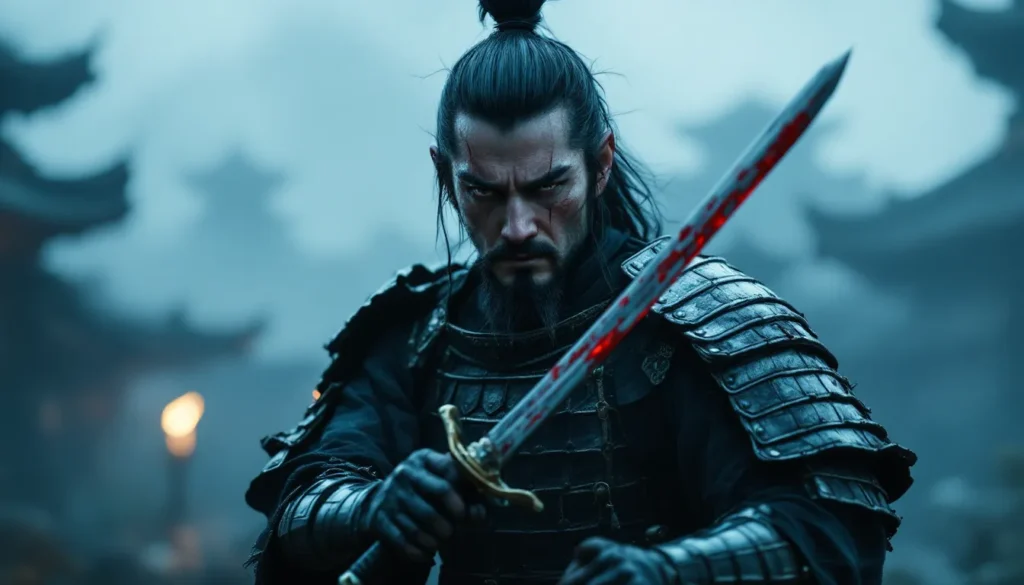
Jin’s weapon also changes thematically. Your katana accumulates wear and bloodstains as the game progresses. Early game, you see Jin carefully maintaining his sword. Late game, it’s stained and battered, a tool rather than a sacred object.
The character model captures subtle emotional details. Jin’s posture changes between cutscenes, earlier encounters show upright, proud bearing. Later scenes show Jin slouching, moving with exhaustion rather than discipline. His face ages throughout the story, weathered by moral compromise and constant fighting. These aren’t just aging effects: they’re visual representations of spiritual decay.
Voice Acting and Motion Capture
Kazuhiro Yamaji provides the original Japanese voice performance, and David Haig voices the English localization. Both performances capture Jin’s internal conflict brilliantly, though they approach the character slightly differently.
Yamaji’s performance emphasizes restraint and honor. He delivers lines with measured control, making moments of emotional breakdown devastatingly powerful. When Yamaji’s Jin expresses frustration or moral conflict, the emotion hits harder because it contradicts his usually controlled delivery. This approach makes his descent feel tragic, you’re watching a disciplined man fracture under impossible circumstances.
Haig’s English performance emphasizes grittiness and world-weariness. He delivers lines with slightly more vulnerability, making Jin’s emotional struggles more immediately apparent. Haig’s Jin sounds like someone already struggling with compromise, making his full transformation feel inevitable rather than surprising.
The motion capture technology brings these vocal performances to physical life. Jin’s animations reflect his emotional state. Early game combat shows technical precision, clean strikes, proper form, disciplined movement. Late game animation includes more brutal flourishes, unnecessary additional strikes, psychological showmanship. You’re watching a samurai transform into something else at the most fundamental level.
Cutscene animations capture subtle moments brilliantly. A scene where Jin looks at his blood-stained hands conveys more moral conflict than exposition dialogue ever could. His interactions with allies show physical distance increasing even as he helps them, a man becoming increasingly isolated. Motion capture technology ensures that Jin’s voice acting and physical performance align perfectly, creating a unified portrait of a man fragmenting under moral pressure.
Recent gaming news outlets have revisited Ghost of Tsushima’s 2020 release, praising how Sucker Punch’s voice direction achieved nuance rarely seen in action games. The performance work remains remarkably effective in 2026, holding up against more recent releases.
Jin’s Legacy and Impact on Gaming
Cultural Significance
Jin Sakai represents a significant shift in how gaming portrays samurai and Asian protagonists. Rather than exoticizing samurai culture or treating it as aesthetic window dressing, Ghost of Tsushima engages seriously with bushido philosophy, moral codes, and historical context. Jin isn’t a mystical samurai channeling ancient magic, he’s a man confronting real historical circumstances with limited options.
The game influenced subsequent action games’ approach to protagonist development. Rather than presenting a clear hero’s journey, Ghost of Tsushima asked uncomfortable questions about moral compromise. Post-Ghost of Tsushima titles increasingly explored ethically gray protagonists and questioned whether violent solutions were genuinely necessary.
Jin also became important representation for East Asian protagonists in AAA gaming. Before Ghost of Tsushima, samurai characters were typically supporting roles or villains in Western-developed games. Jin’s position as the lead character, voiced by respected Japanese voice actors, signaled that Asian stories deserved mainline attention. This representation matters culturally and commercially, Ghost of Tsushima sold over 9 million copies, proving substantial audience appetite for Asian-centered narratives.
The game’s visual storytelling influenced industry standards. Gaming guides from reputable sources extensively covered how Ghost of Tsushima communicated narrative through environment design, character animation, and visual progression rather than relying on exposition. This approach influenced subsequent narrative-focused games.
Fan Reception and Community
Jin Sakai immediately resonated with players even though, or perhaps because of, his moral complexity. Unlike straightforward heroes, Jin generates intense discussion about his choices. Should he have embraced the Ghost persona? Was Shimura right to demand traditional honor even facing extinction? These aren’t rhetorical questions the game answers: they’re philosophical debates the community continues.
Fan art communities embraced Jin extensively, but differently than typical game protagonists. Rather than depicting him as triumphant, fan creators frequently explored his internal conflict, Jin torn between identities, Jin haunted by his choices, Jin reflecting on transformation. This suggests fans engaged with his tragedy rather than celebrating his power.
The competitive and speedrunning communities developed extensive knowledge about Jin’s combat system. Players discovered optimal stance combinations, animation cancels, and positioning strategies that transformed combat from story vehicle into mechanical puzzle. Gaming news covered Ghost of Tsushima’s technical depth extensively, with players discovering new mechanics years after release.
Social media discourse around Ghost of Tsushima’s endings remains active in 2026. The choice between Shimura’s path (honor-focused) and Jin’s path (pragmatic survival) generates philosophical debate. This longevity suggests Jin’s arc transcends typical game narrative, he’s achieved cultural staying power.
Community-created content, guides, lore videos, character analyses, keeps Jin’s story alive. The Ghost of Tsushima Scenery: community content shows players continuing to explore the game’s world and Jin’s place within it. Six years post-release, new players discovering Jin’s journey generate fresh perspectives that sustain community engagement.
Player testimonials frequently mention personal resonance with Jin’s choices. People who’ve sacrificed personal values for practical outcomes see their own moral compromise reflected in his journey. This emotional resonance explains why Jin Sakai achieved status as one of gaming’s most discussed protagonists even though not inventing new gameplay mechanics or revolutionizing technical design. He’s a well-written character in a medium frequently criticized for shallow protagonist writing.
Conclusion
Jin Sakai endures as a memorable protagonist because he embodies genuine moral conflict without offering comfortable resolution. He’s not presented as right or wrong, he’s presented as a person forced to choose between incompatible values. The game trusts you to wrestle with his choices rather than validating them through narrative victory.
What separates Jin from typical game heroes is his isolation. By the game’s end, he’s militarily victorious but personally destroyed. He’s lost his relationships, his honor, and his identity. The legend of the Ghost is real, but it exists at the cost of Jin Sakai’s humanity. This refusal to separate victory from tragedy makes Ghost of Tsushima’s narrative sophisticated beyond typical action game storytelling.
The Ghost of Tsushima Key: Unlocking Secrets to Master Your Samurai Journey for new players is understanding that Jin’s journey explores why moral codes exist and what happens when circumstances demand their abandonment. Whether you agree with his choices matters less than whether you understand why he made them.
In 2026, Jin Sakai remains relevant not because of technical novelty but because of narrative depth. He’s a character who demands interpretation rather than accepting the game’s implicit stance. That complexity, that refusal to offer easy answers about honor and survival, explains why Ghost of Tsushima continues to engage players years after release. Jin isn’t a hero to celebrate or condemn, he’s a character to understand, question, and perhaps see reflected in your own compromises and transformations. That’s the legacy that ensures he’ll remain one of gaming’s most compelling protagonists.